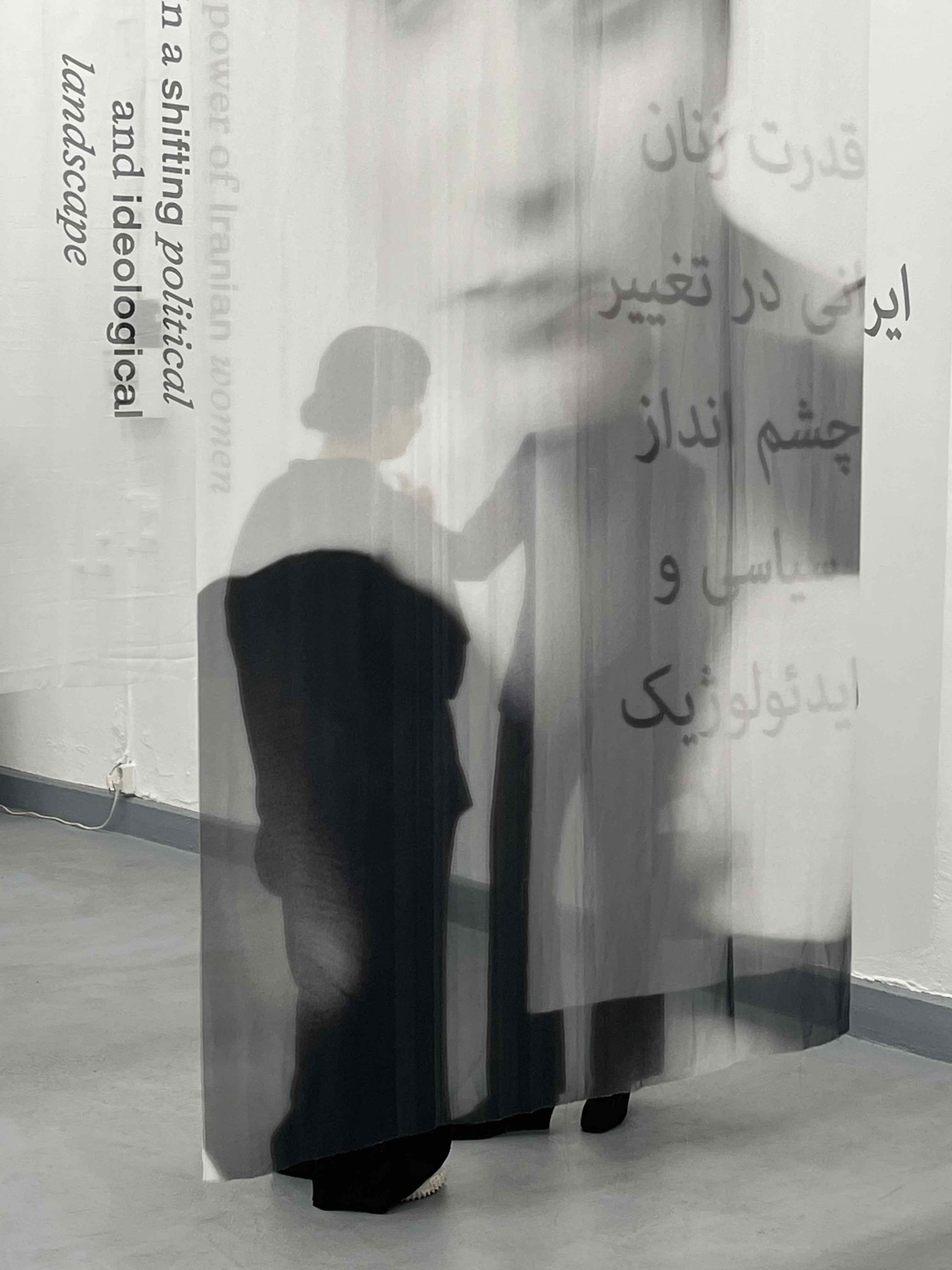
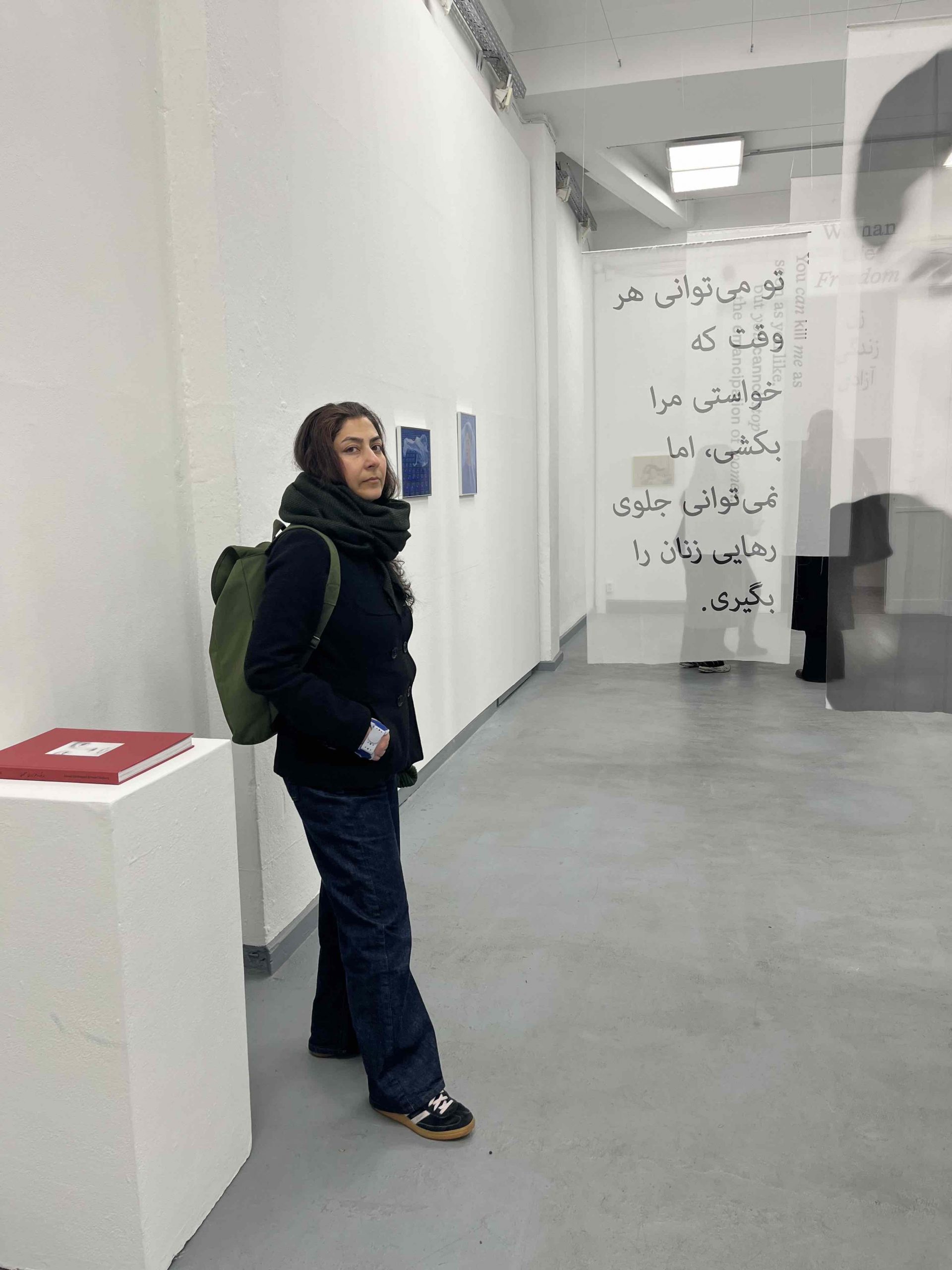
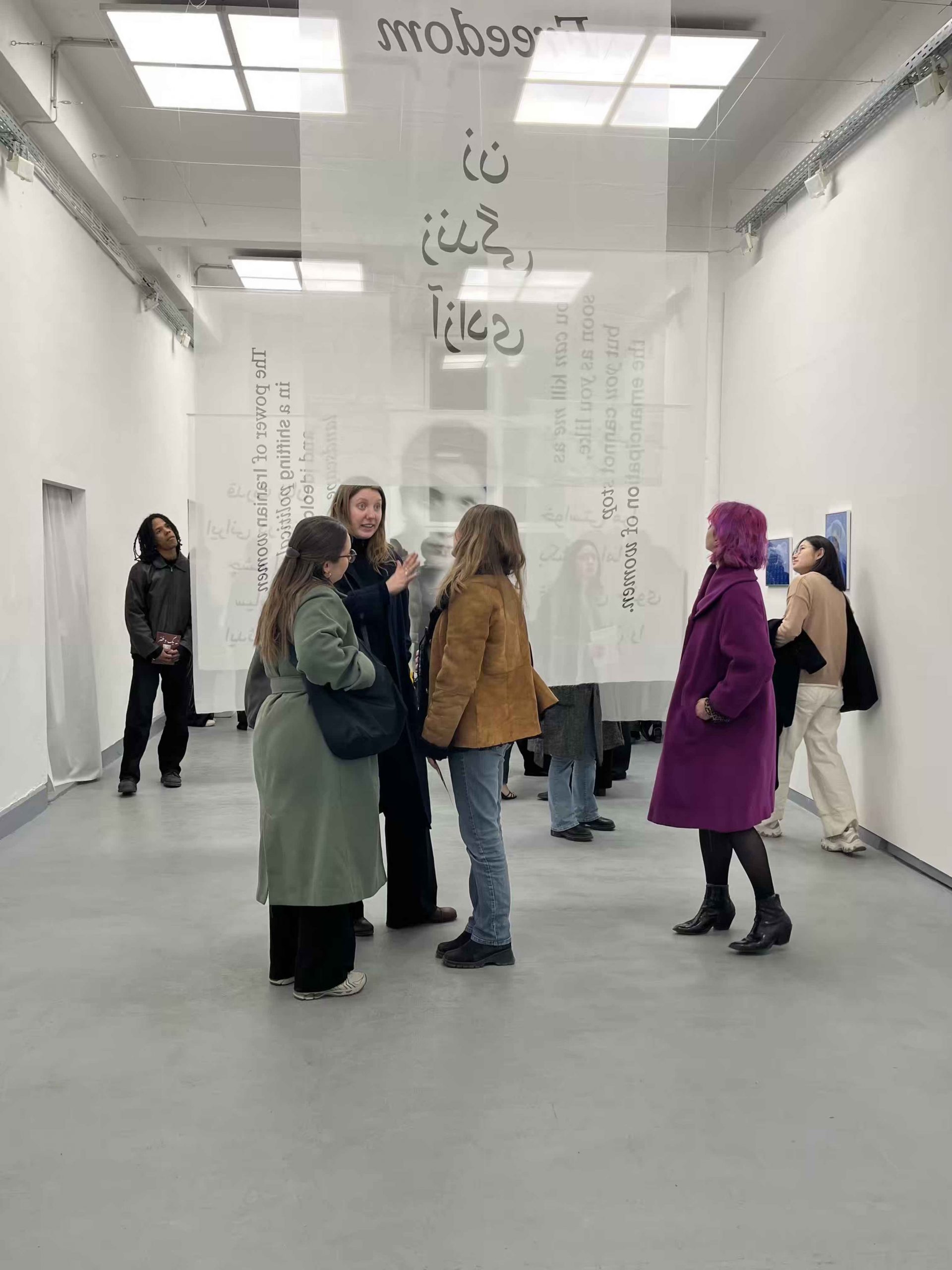
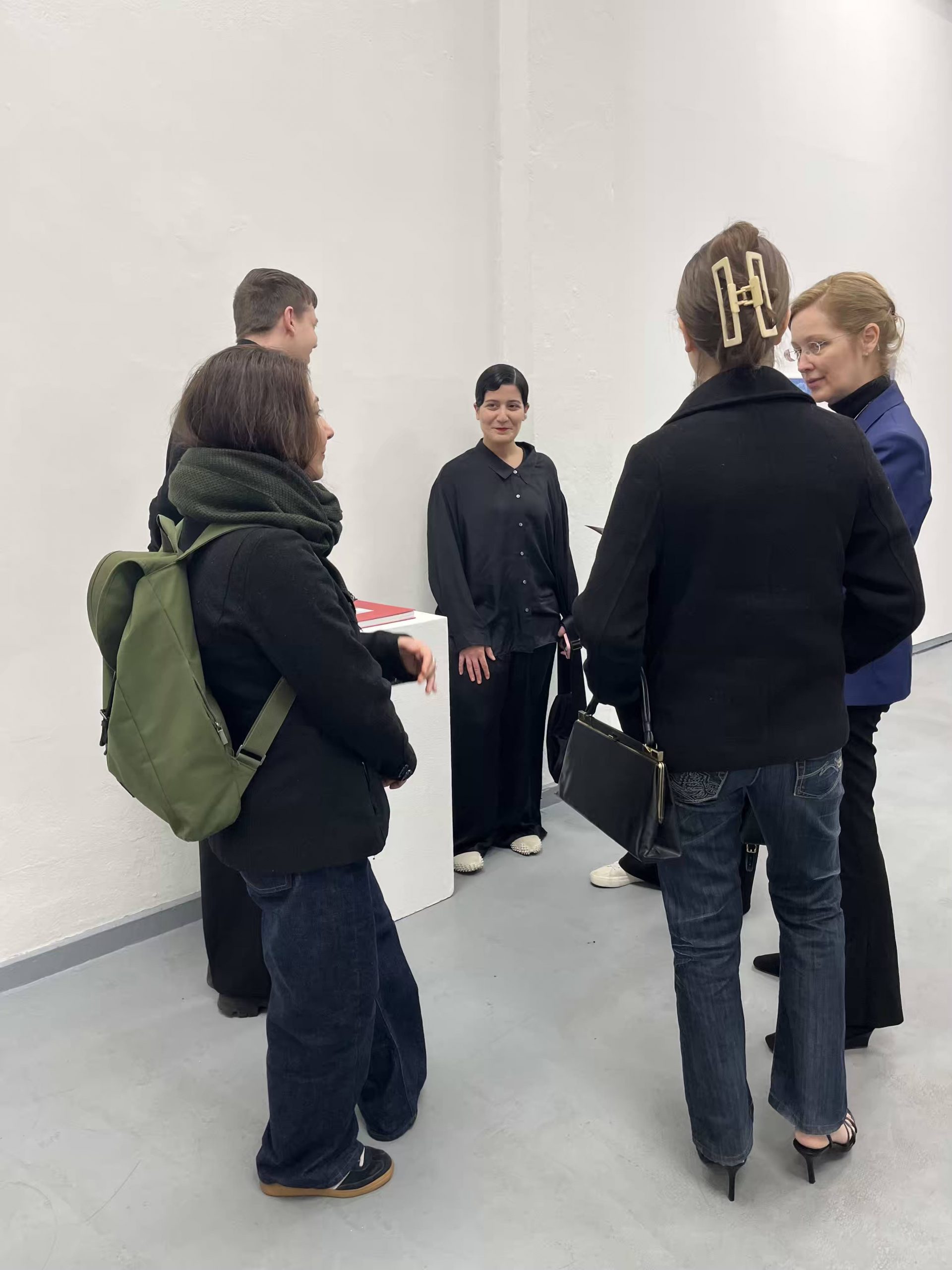
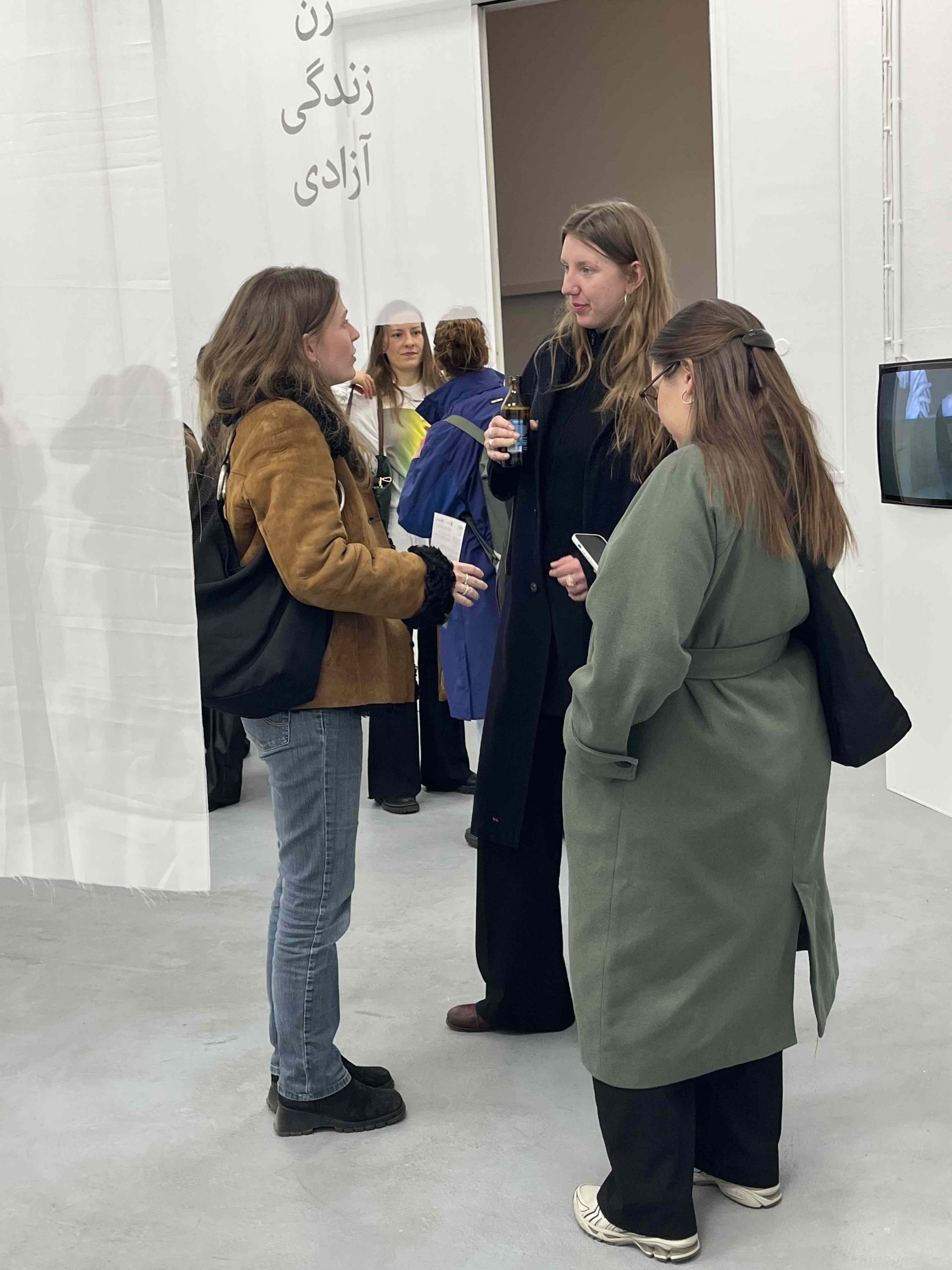
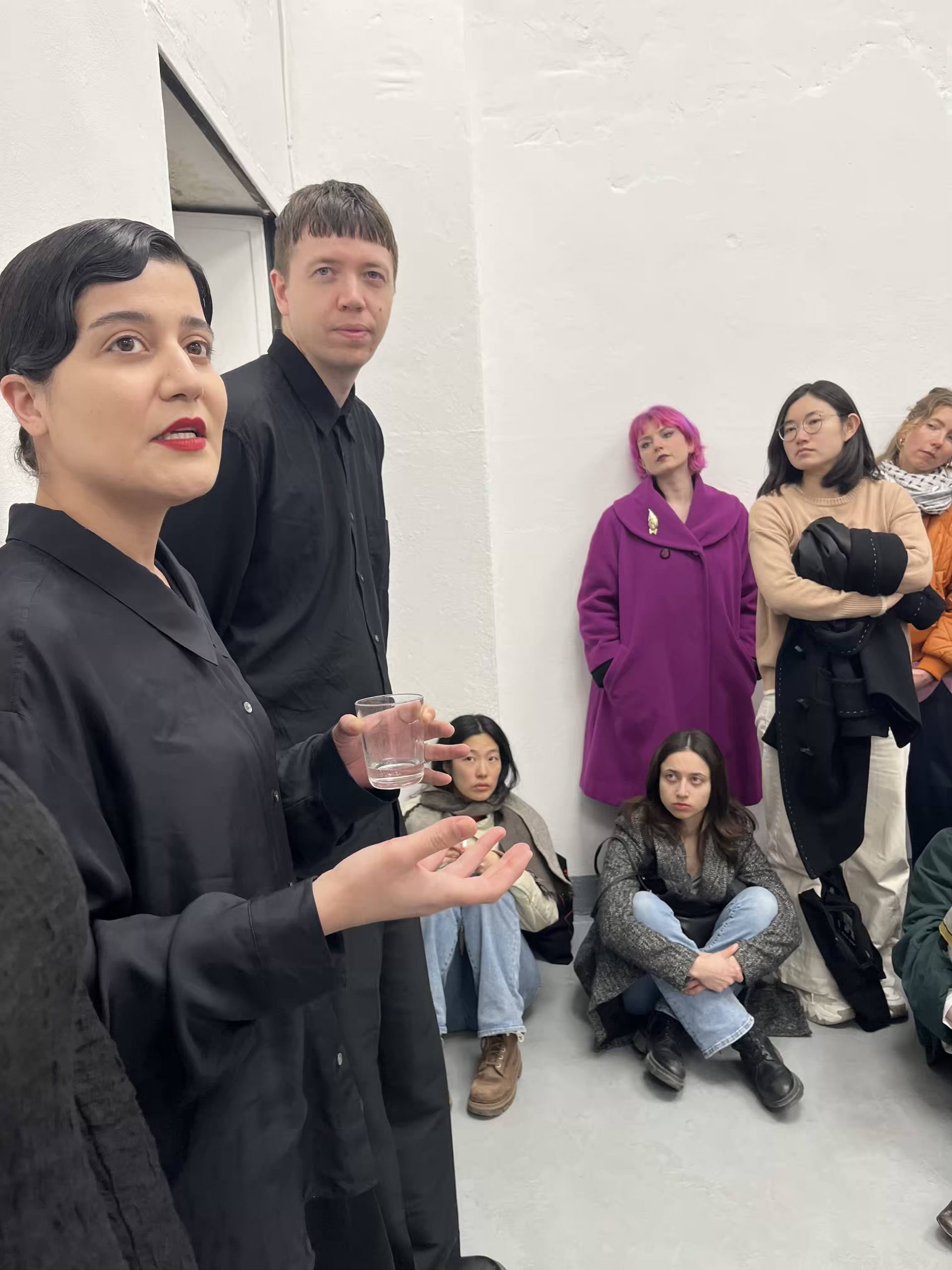
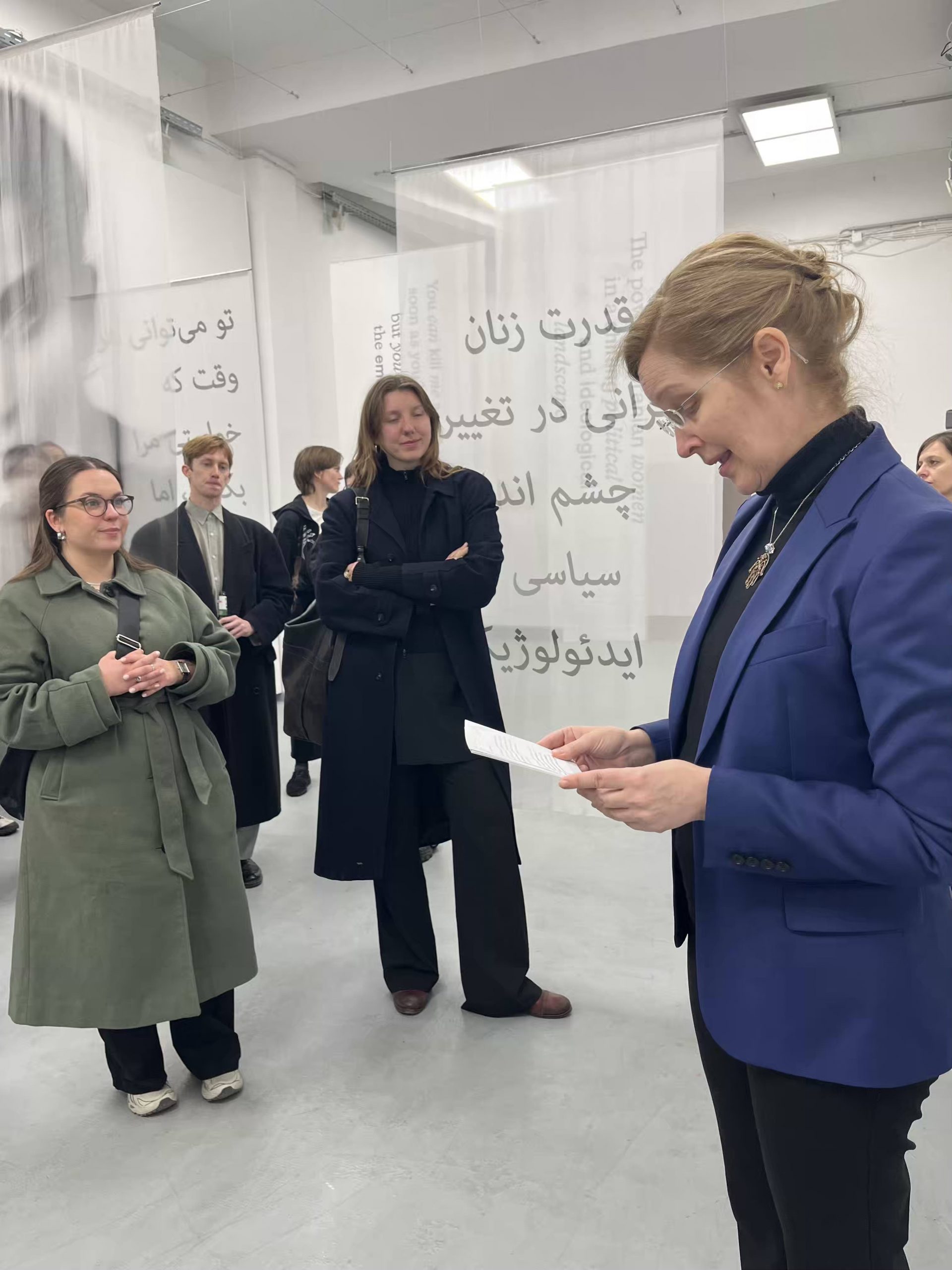
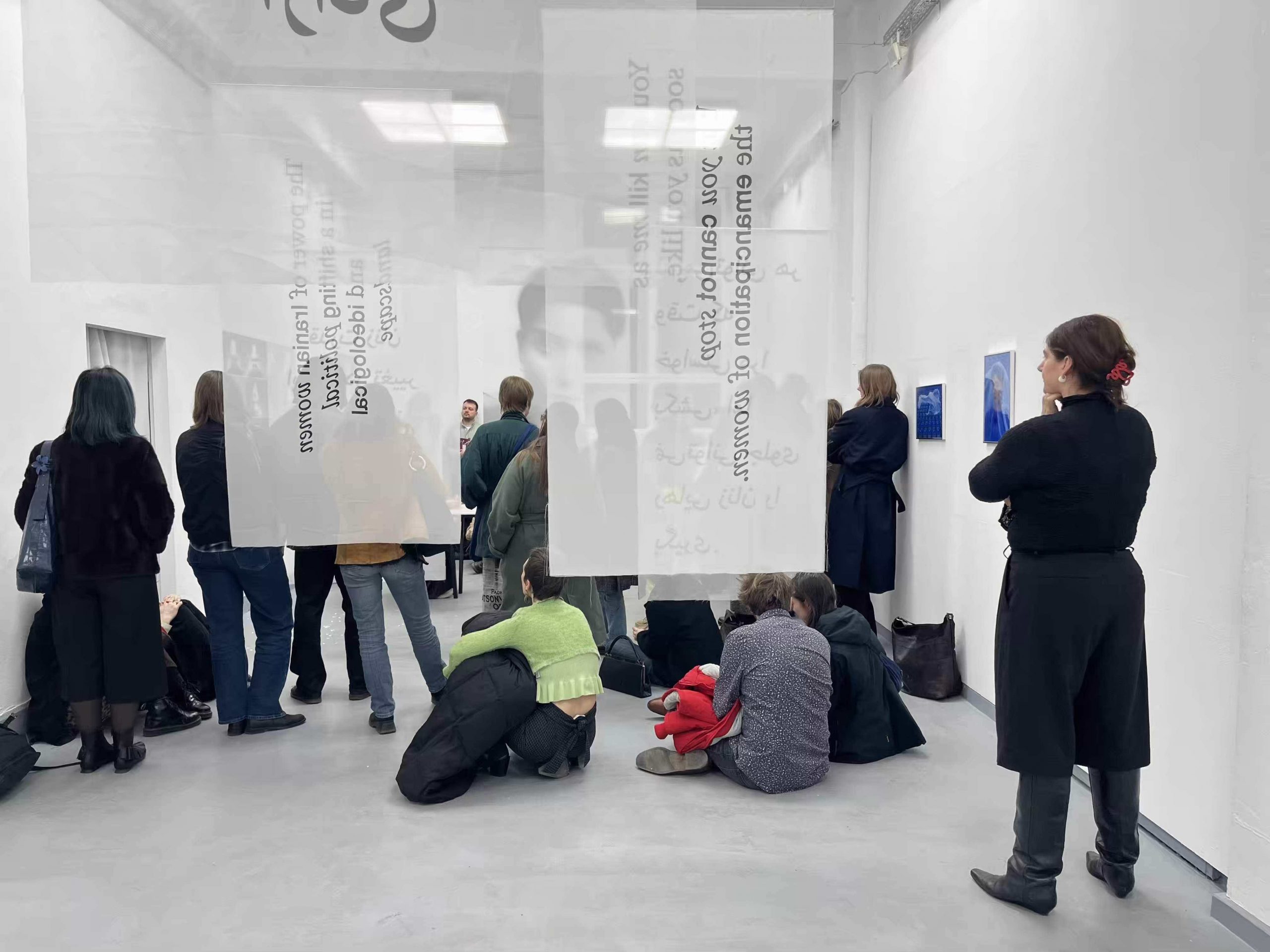
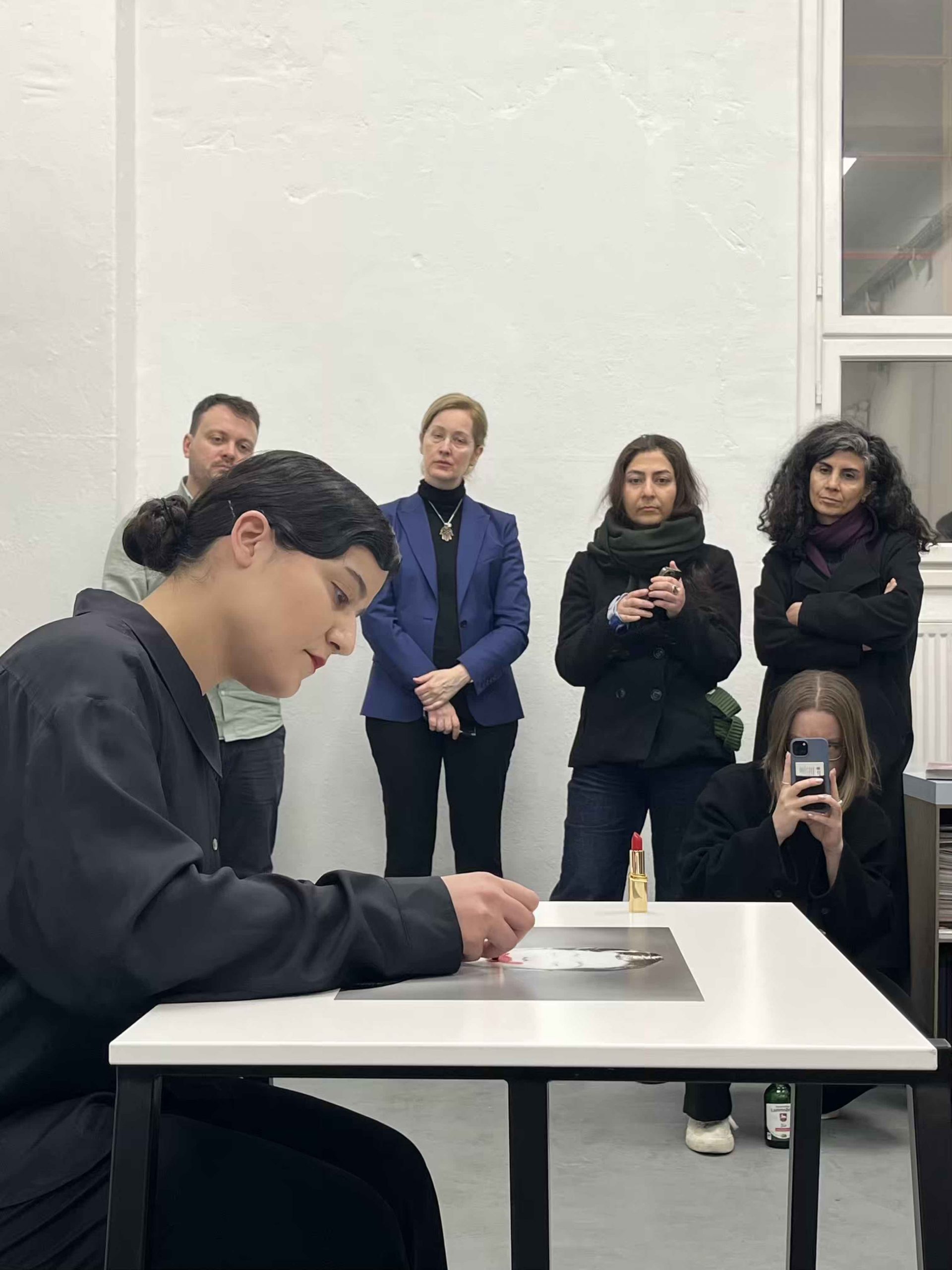
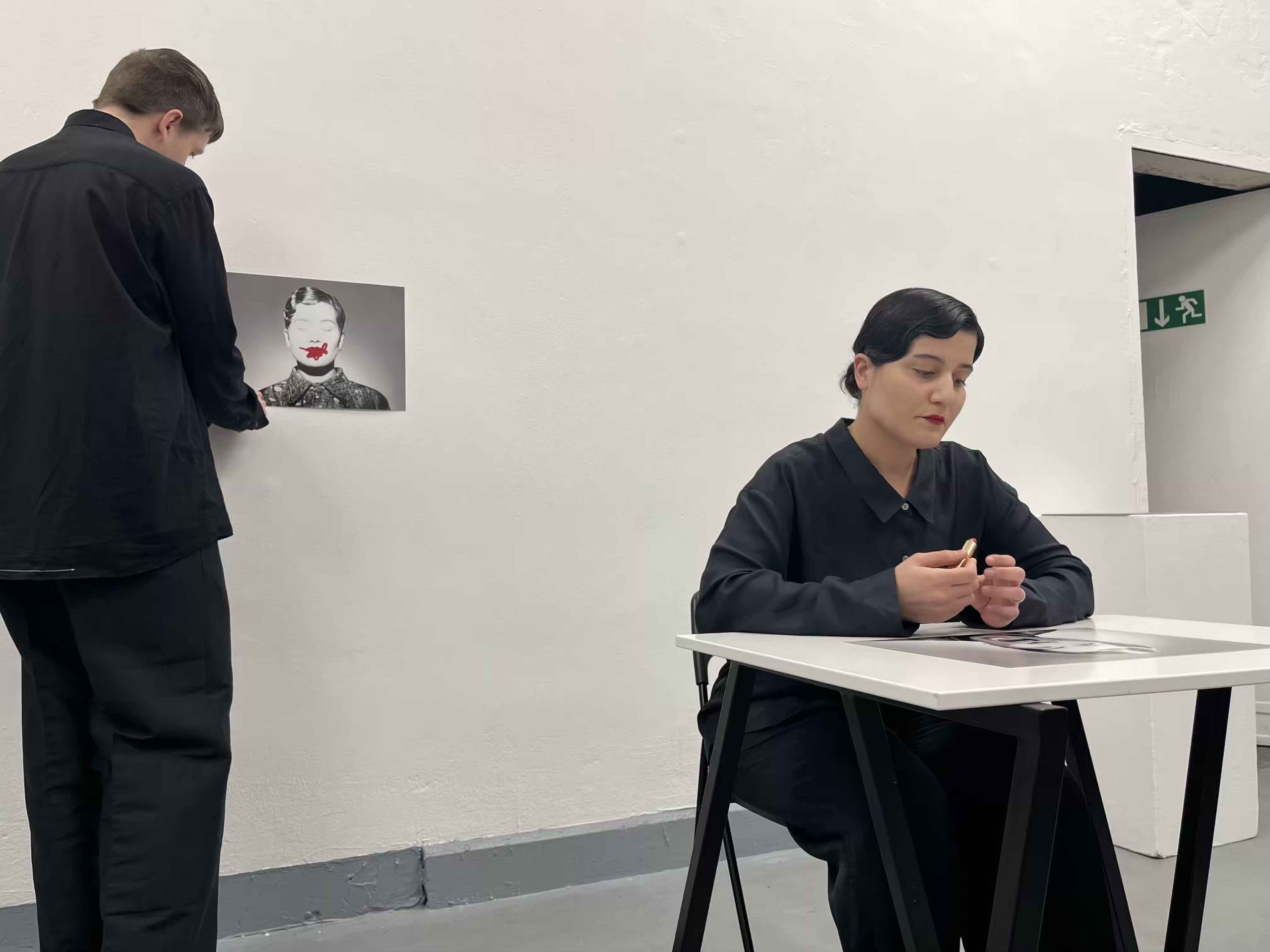
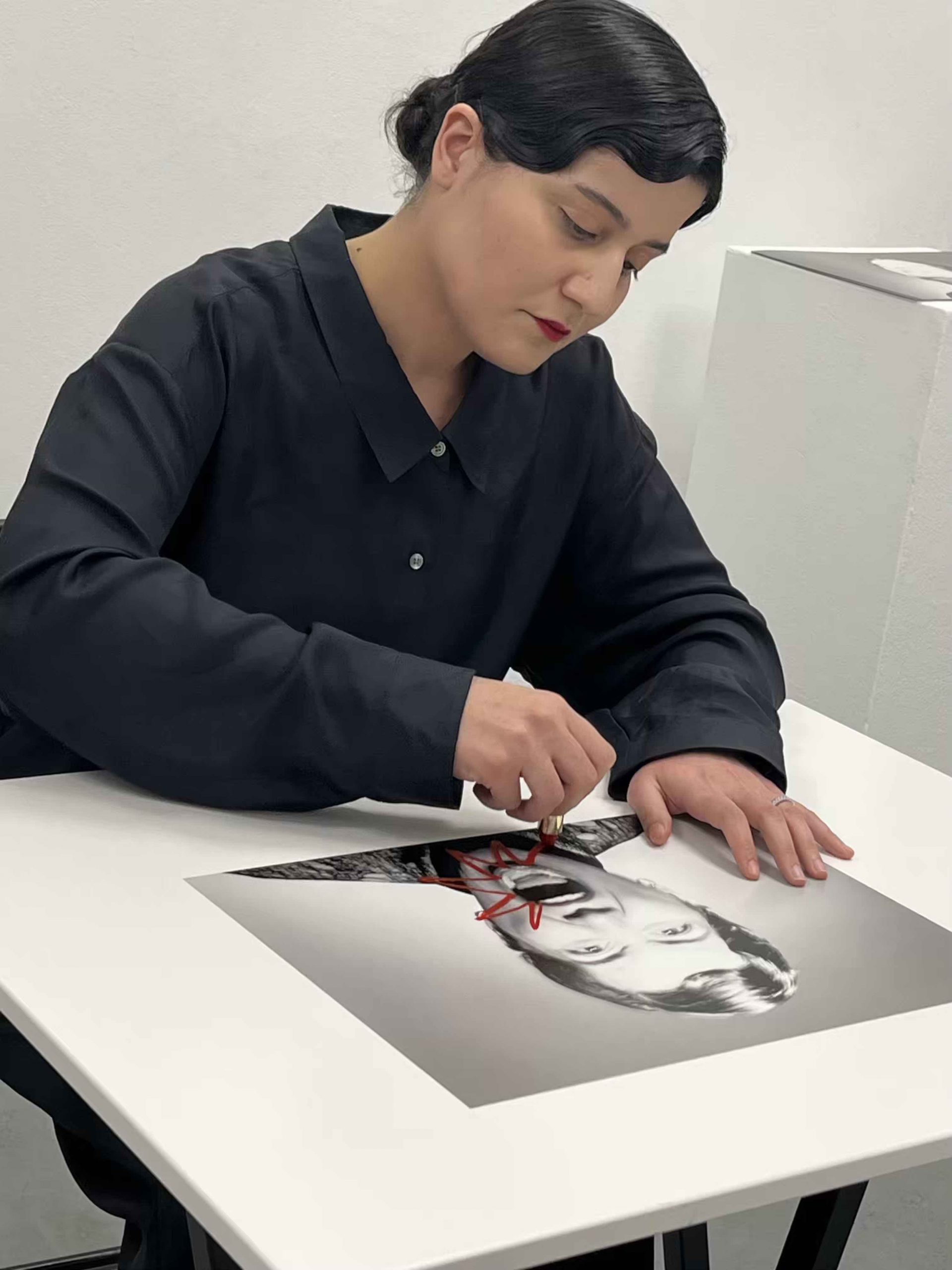
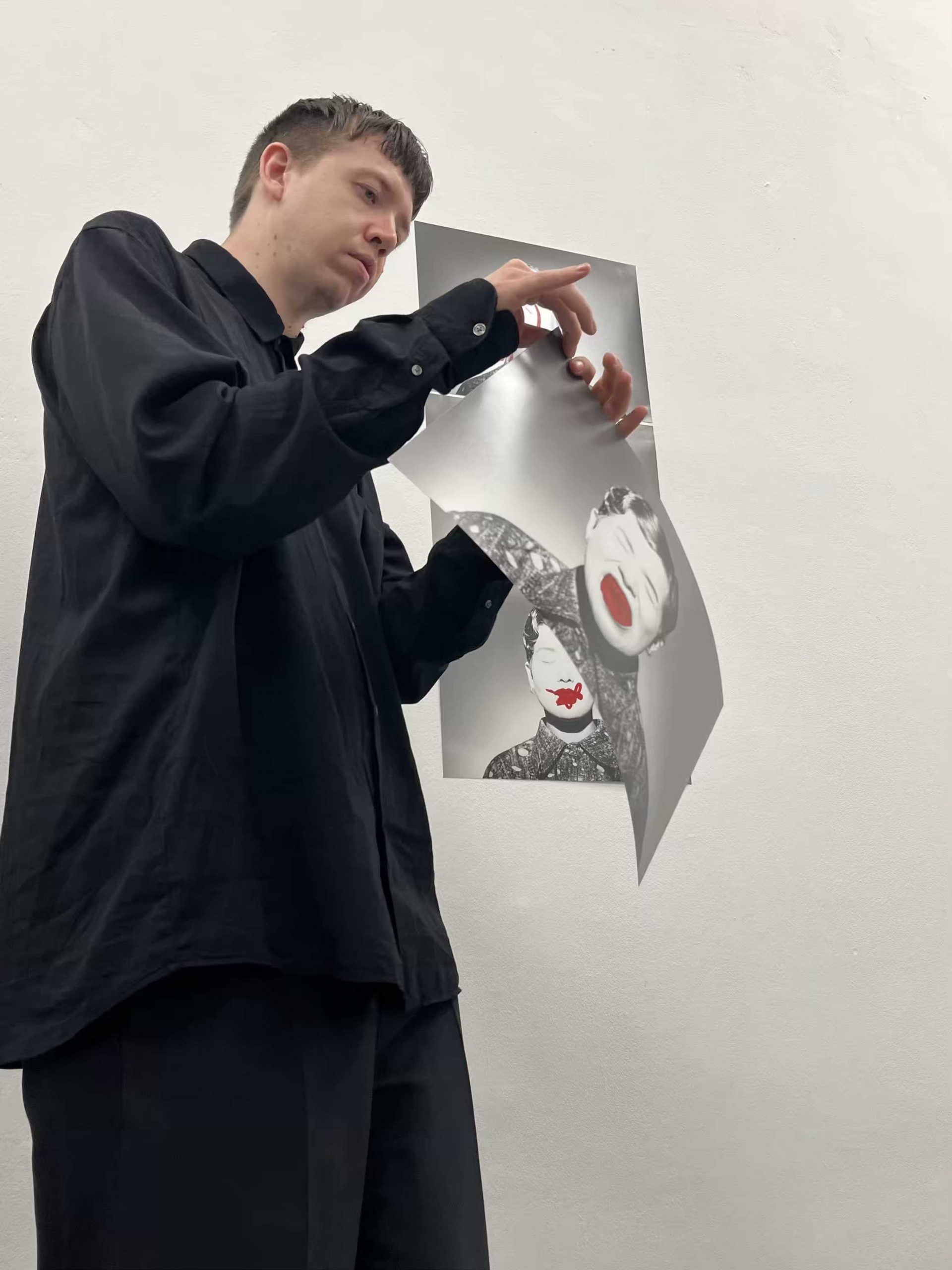
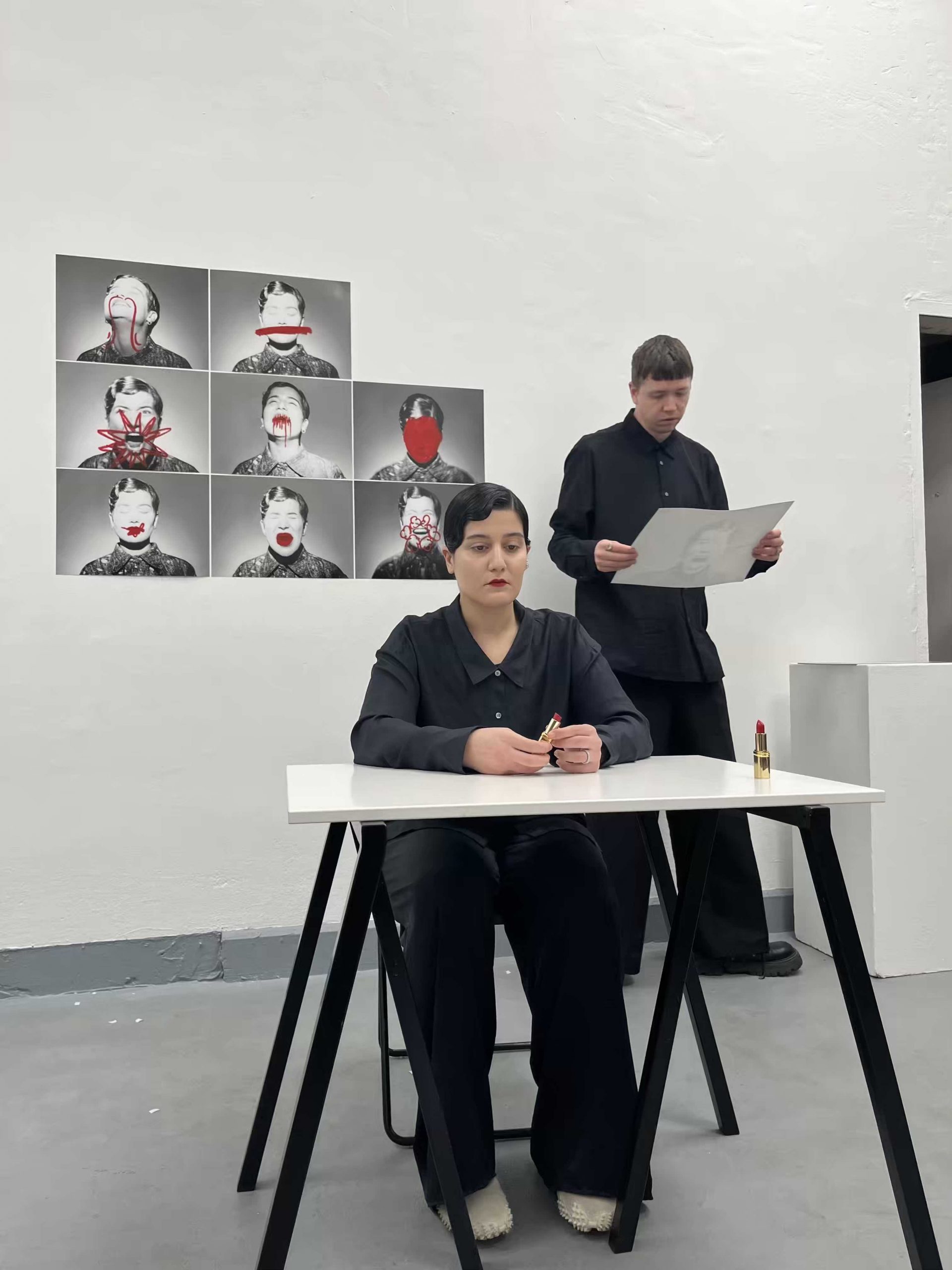
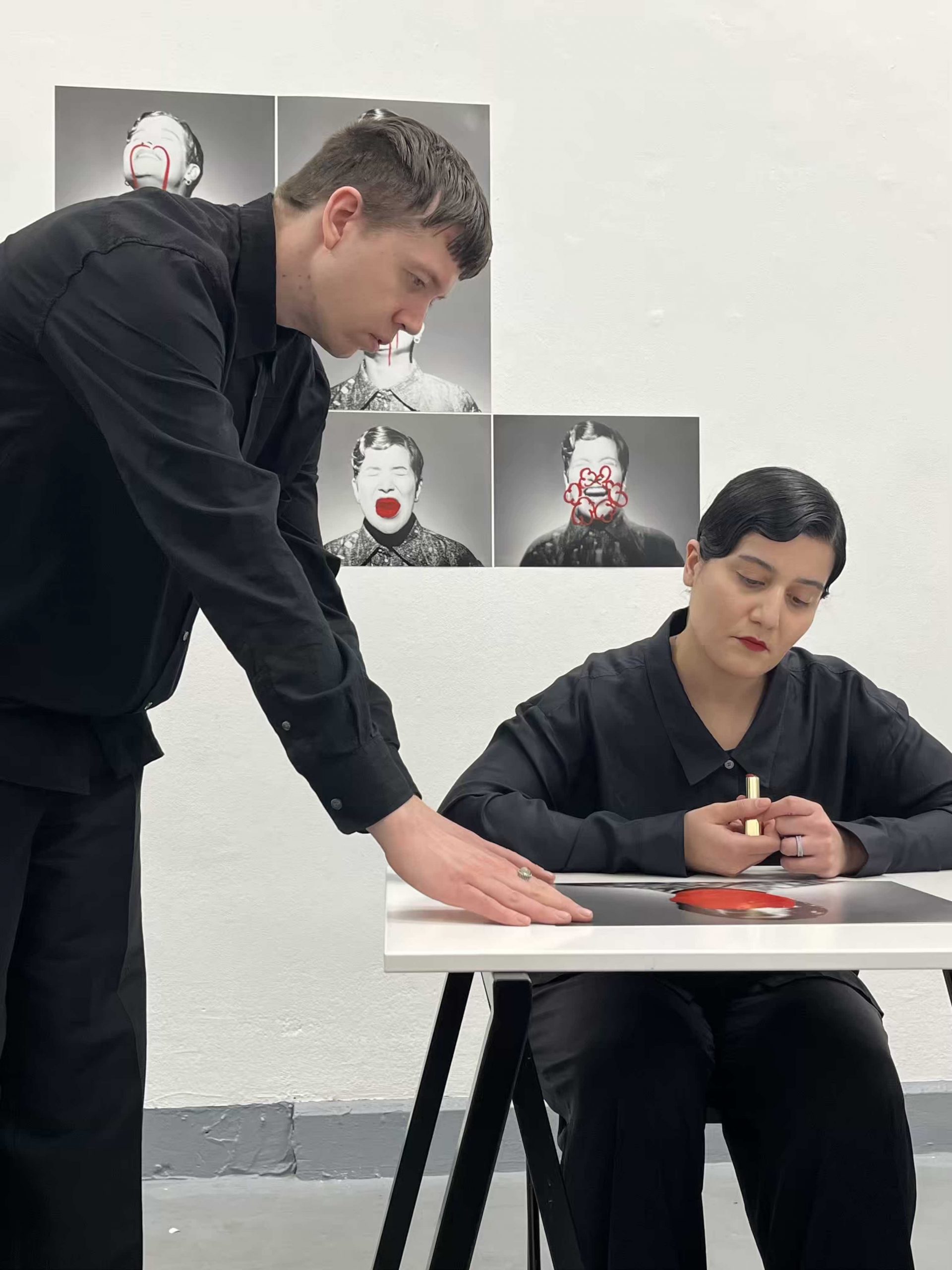
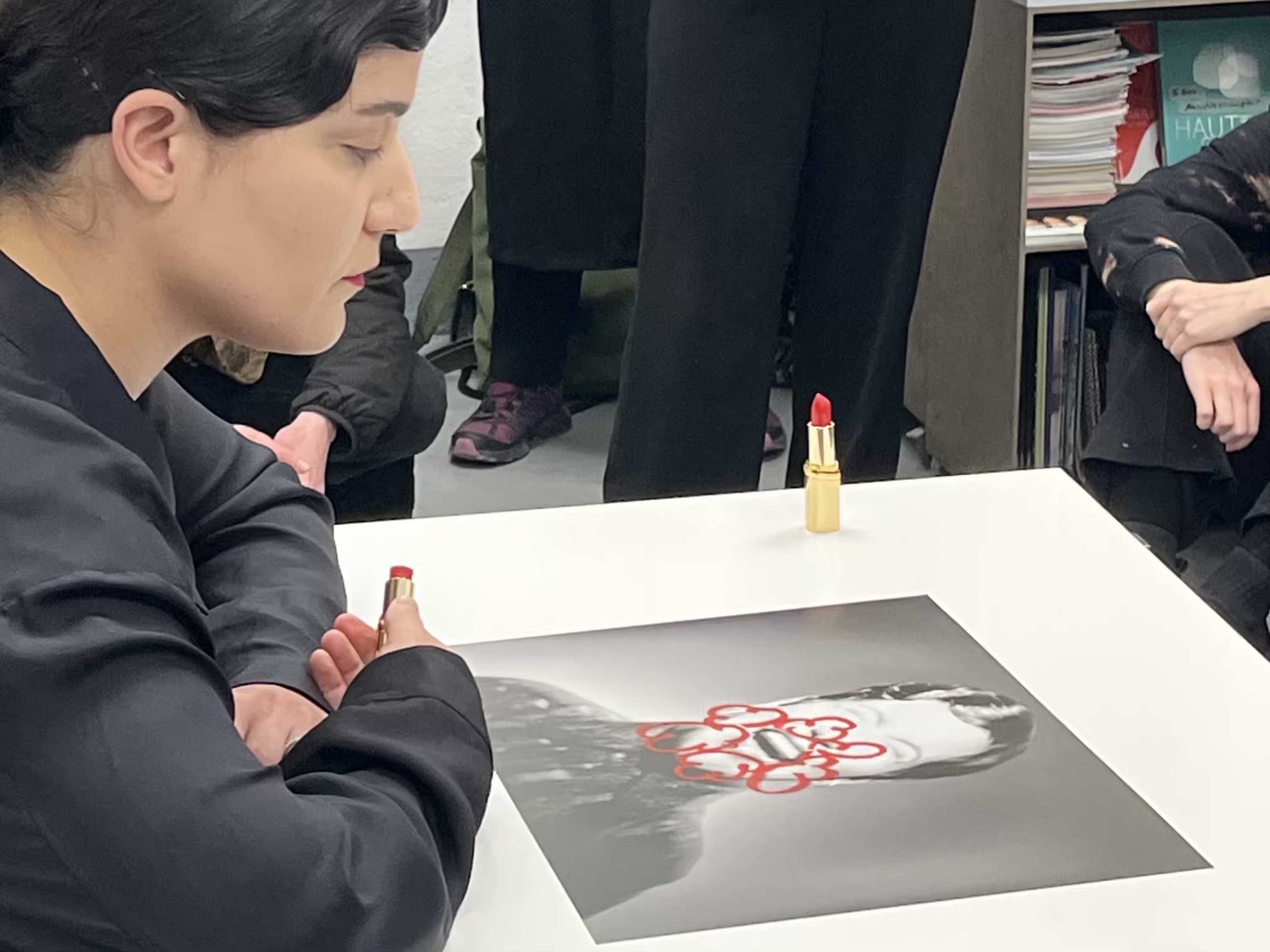
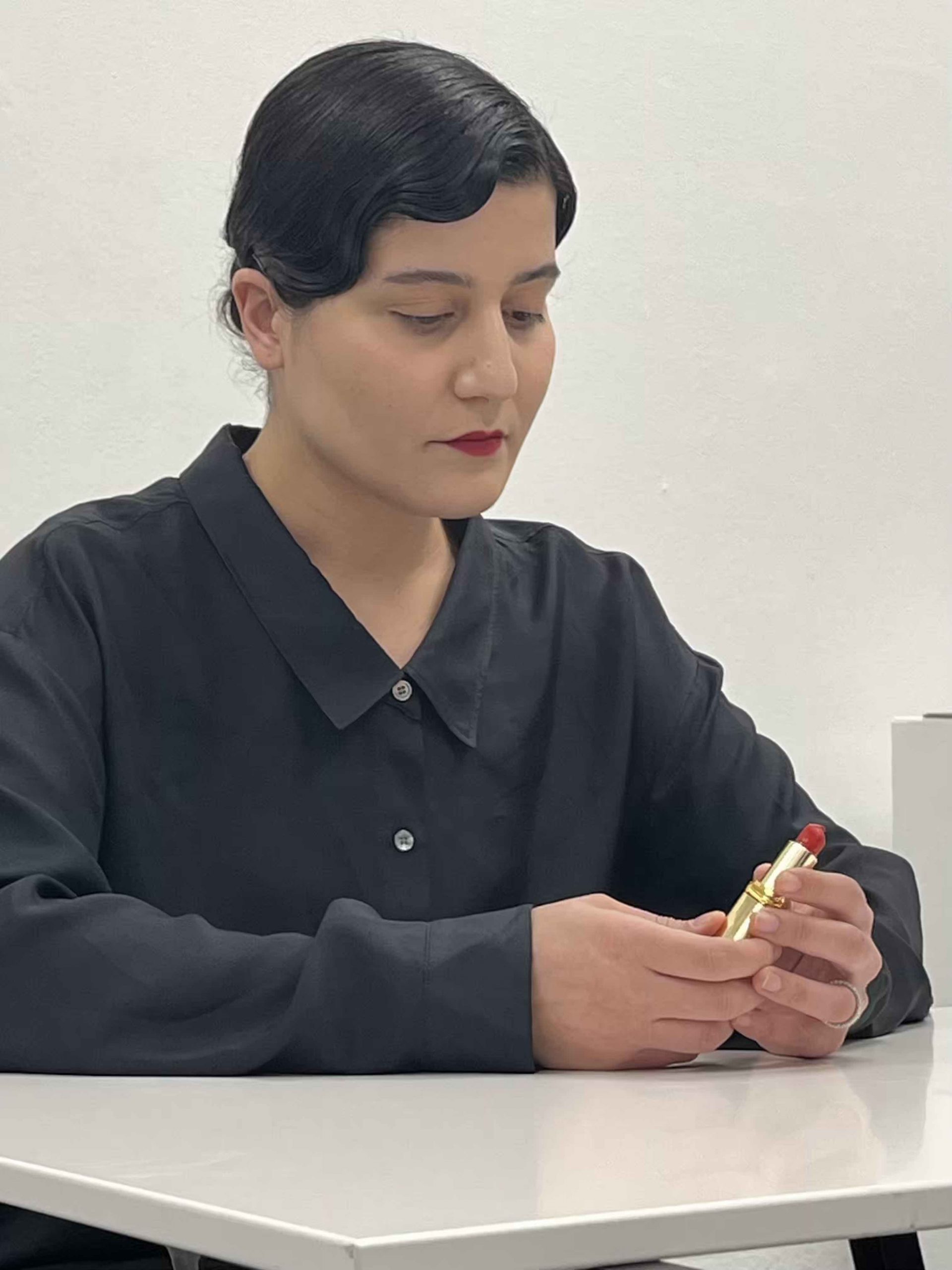
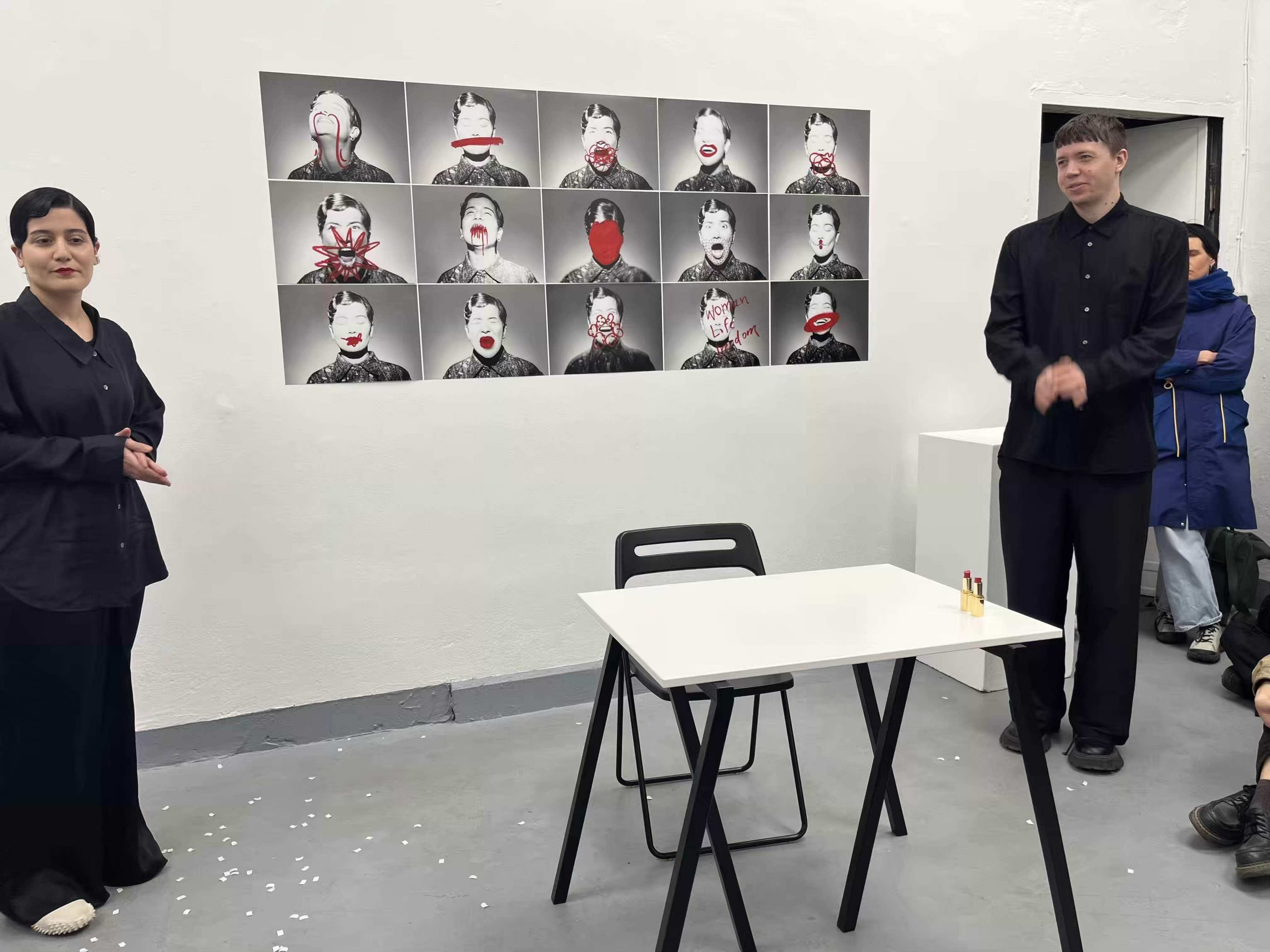
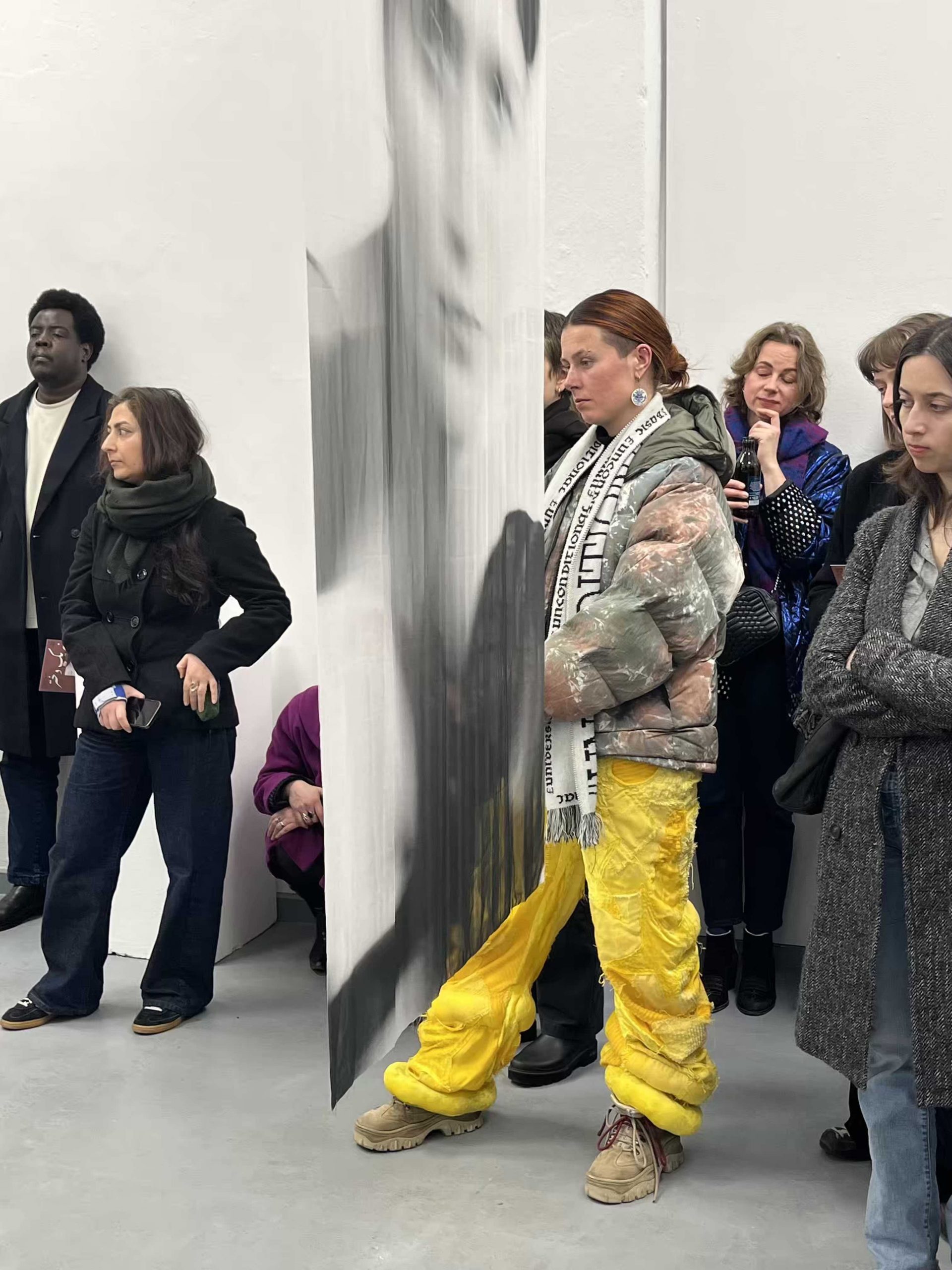
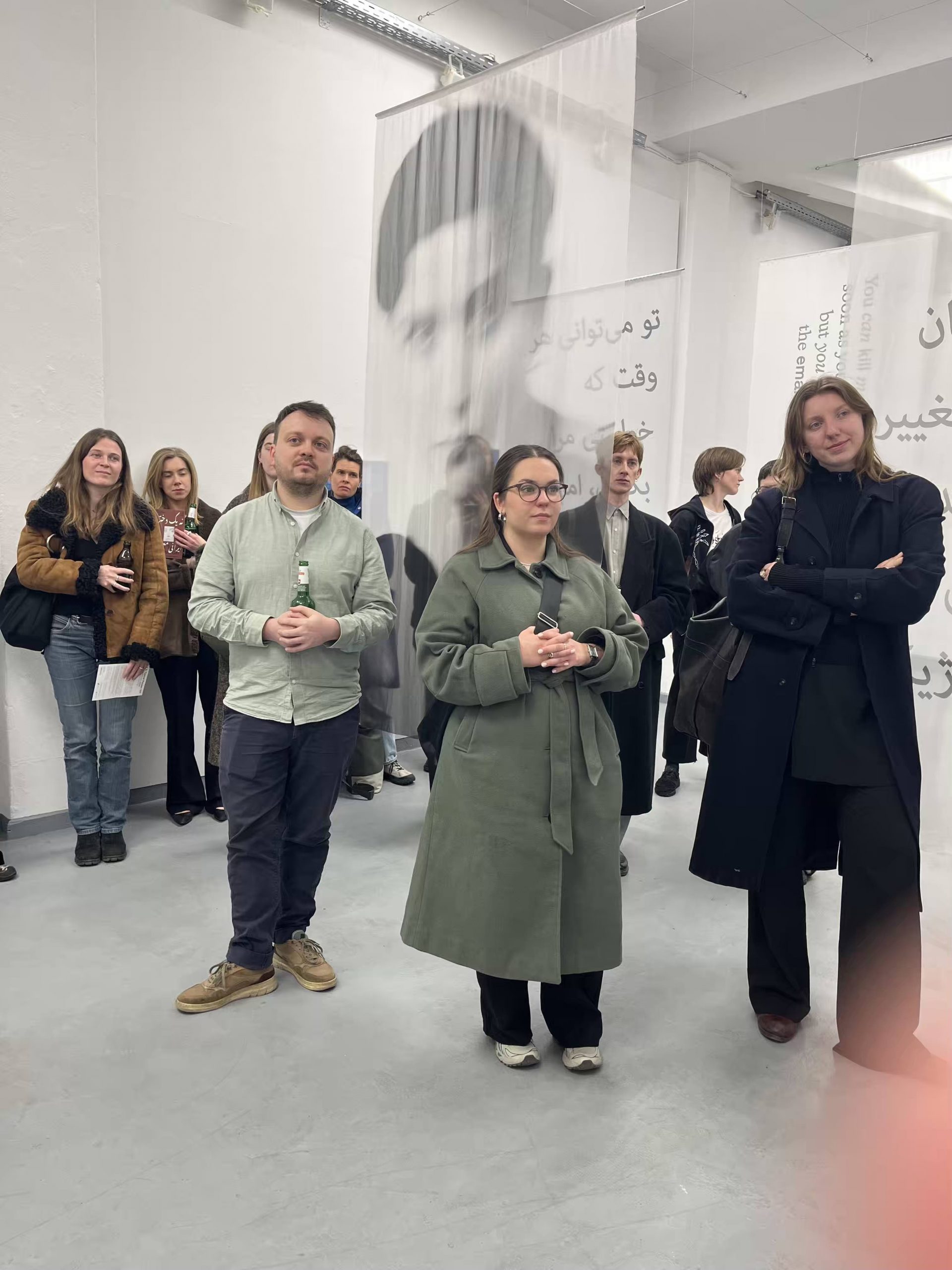
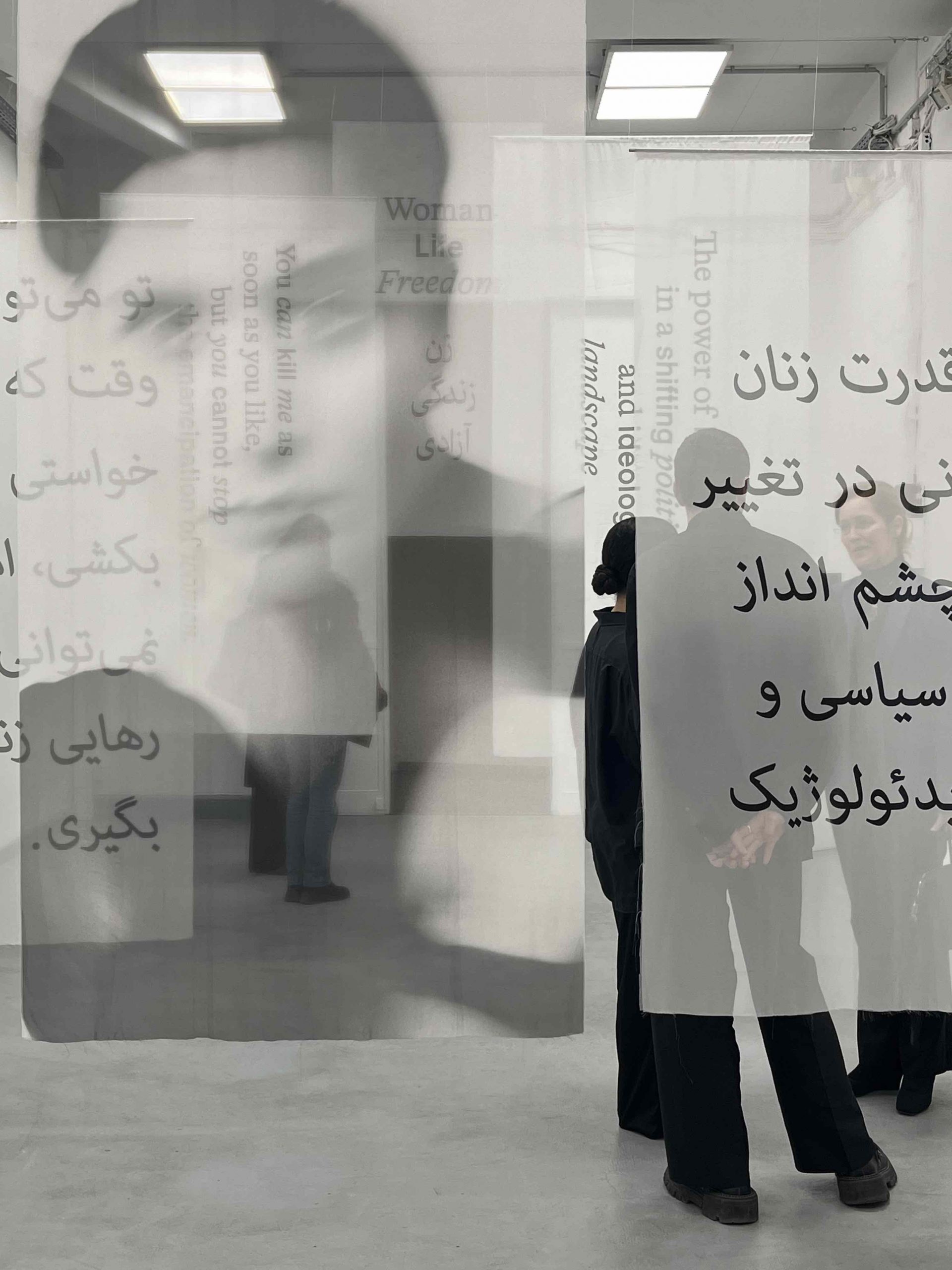
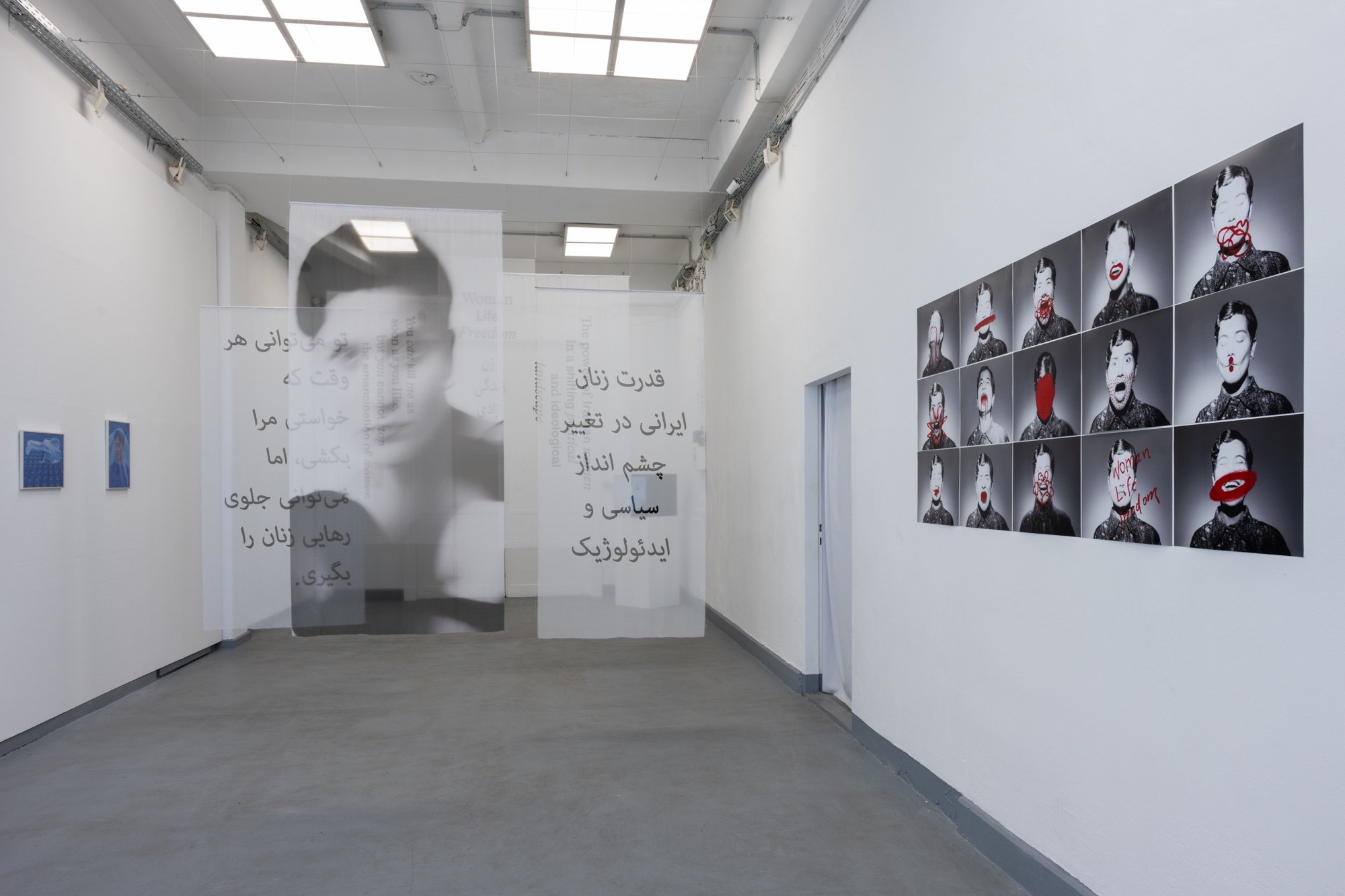
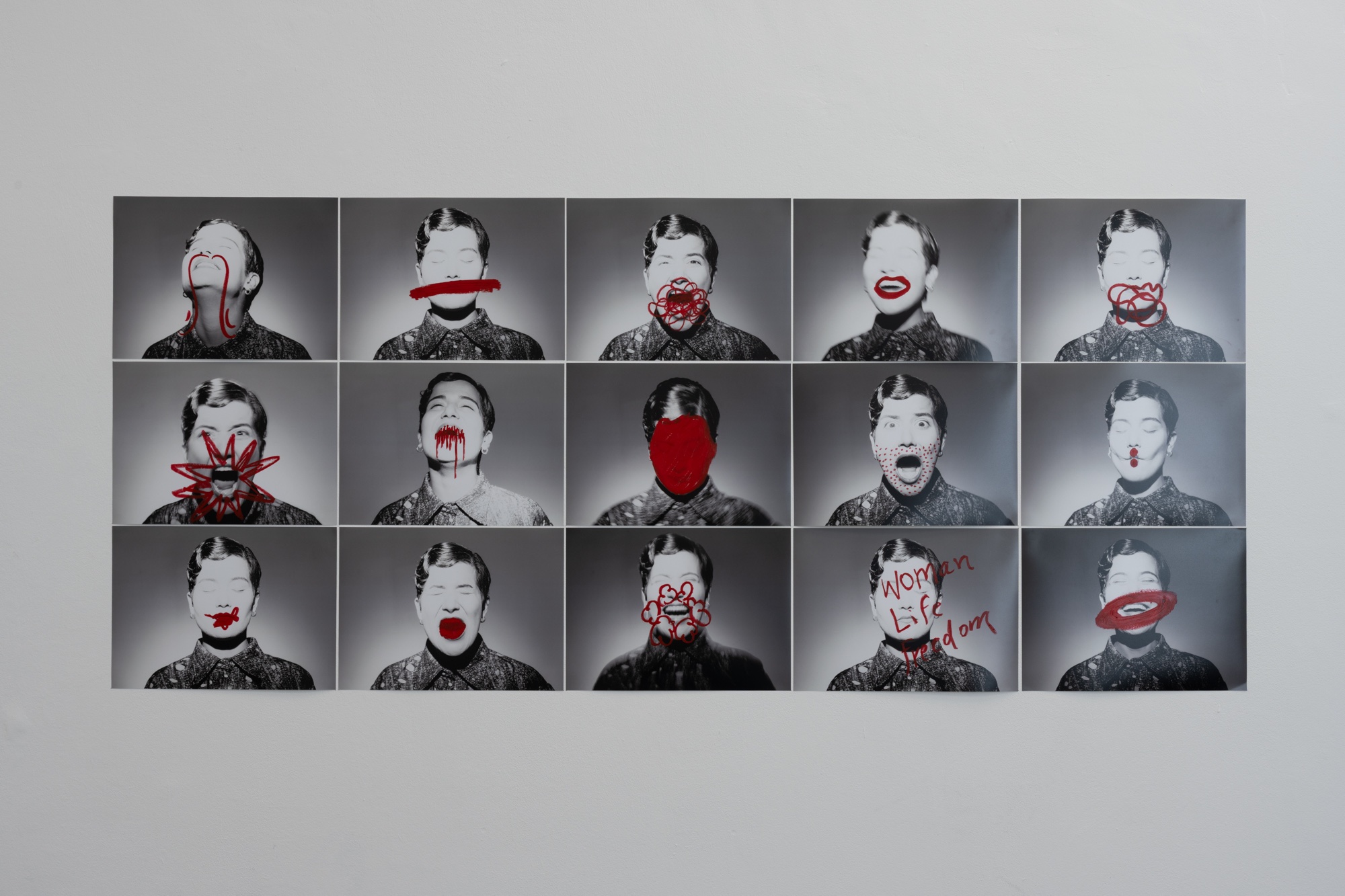
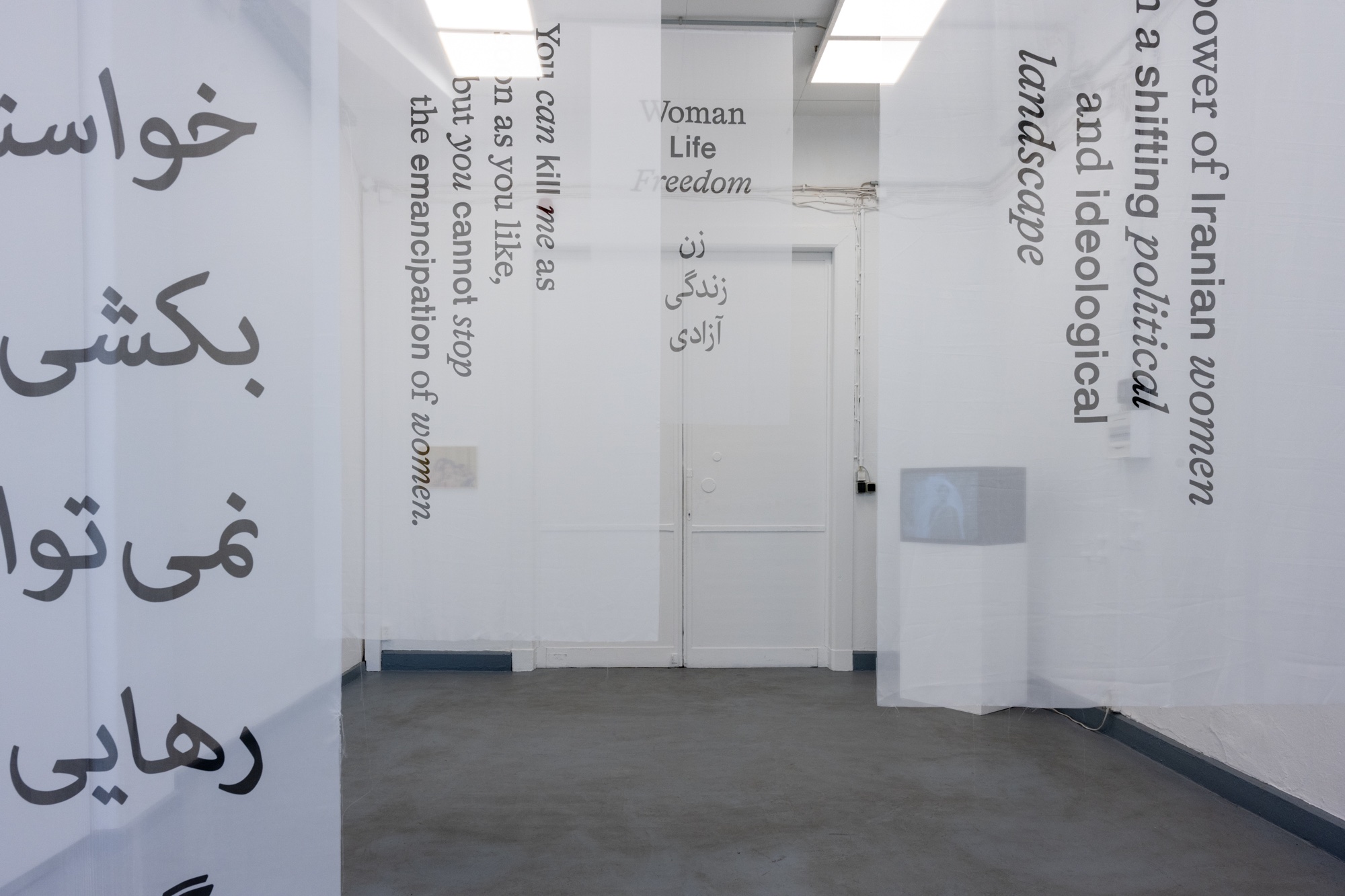
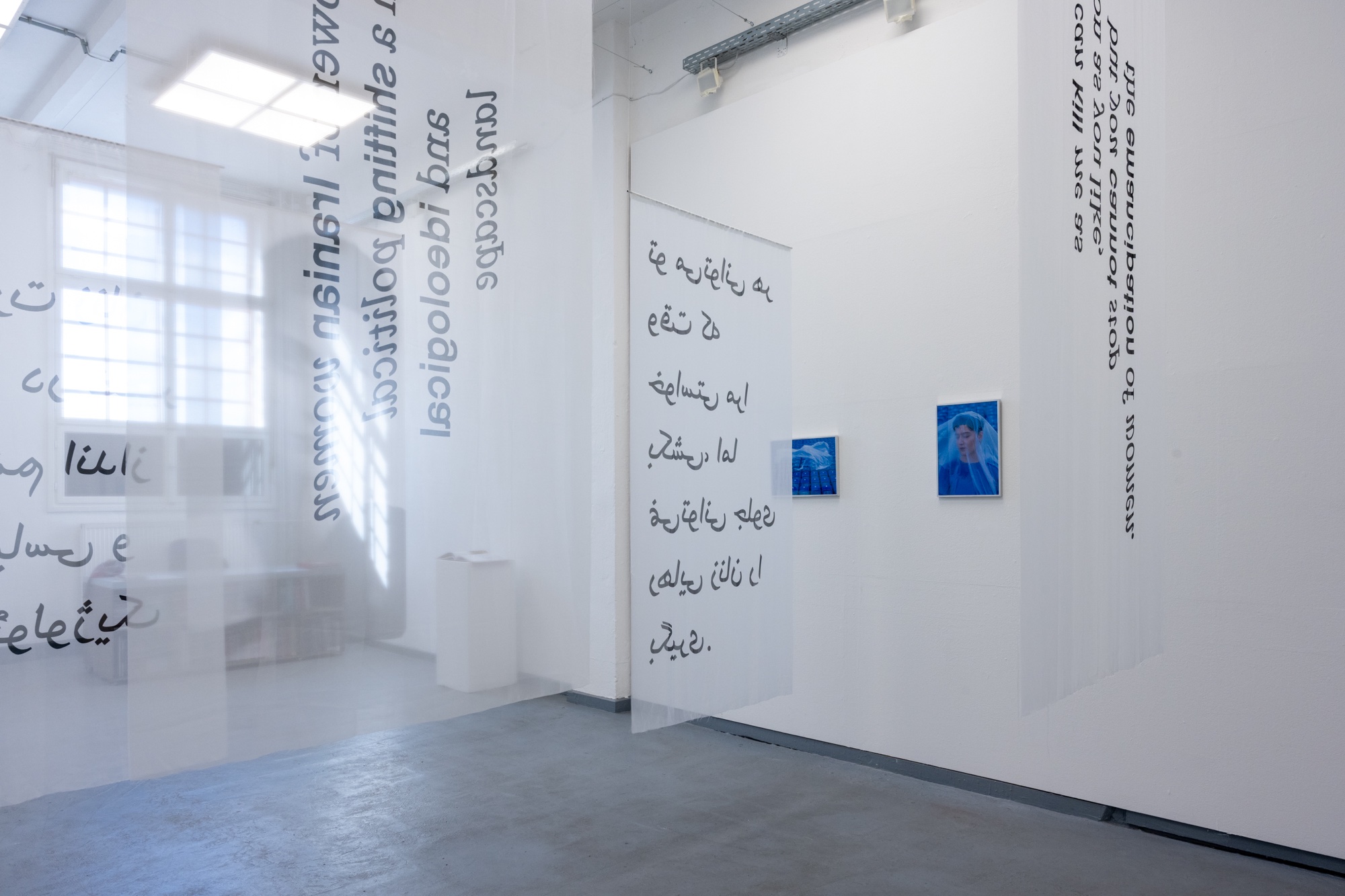
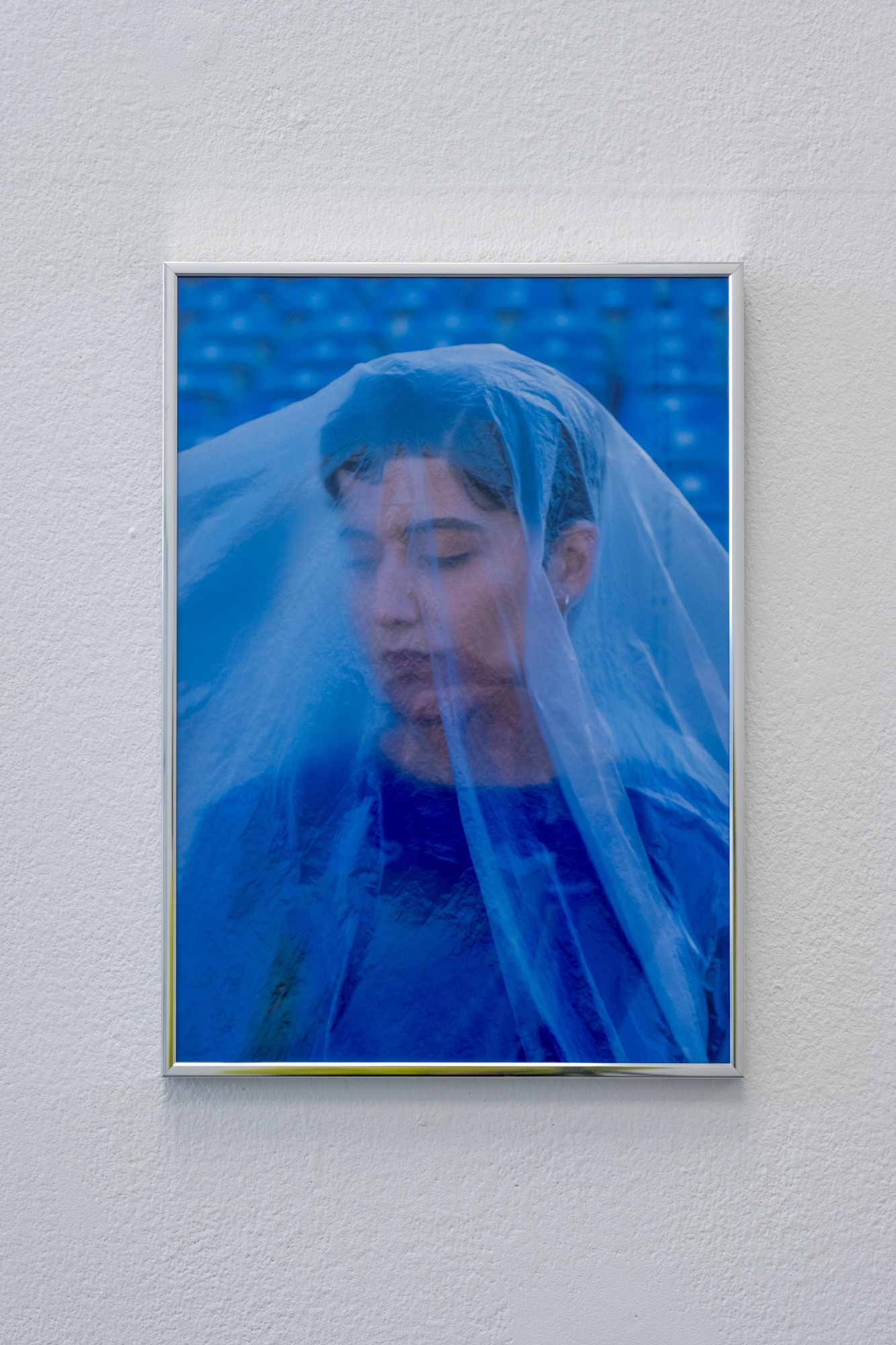
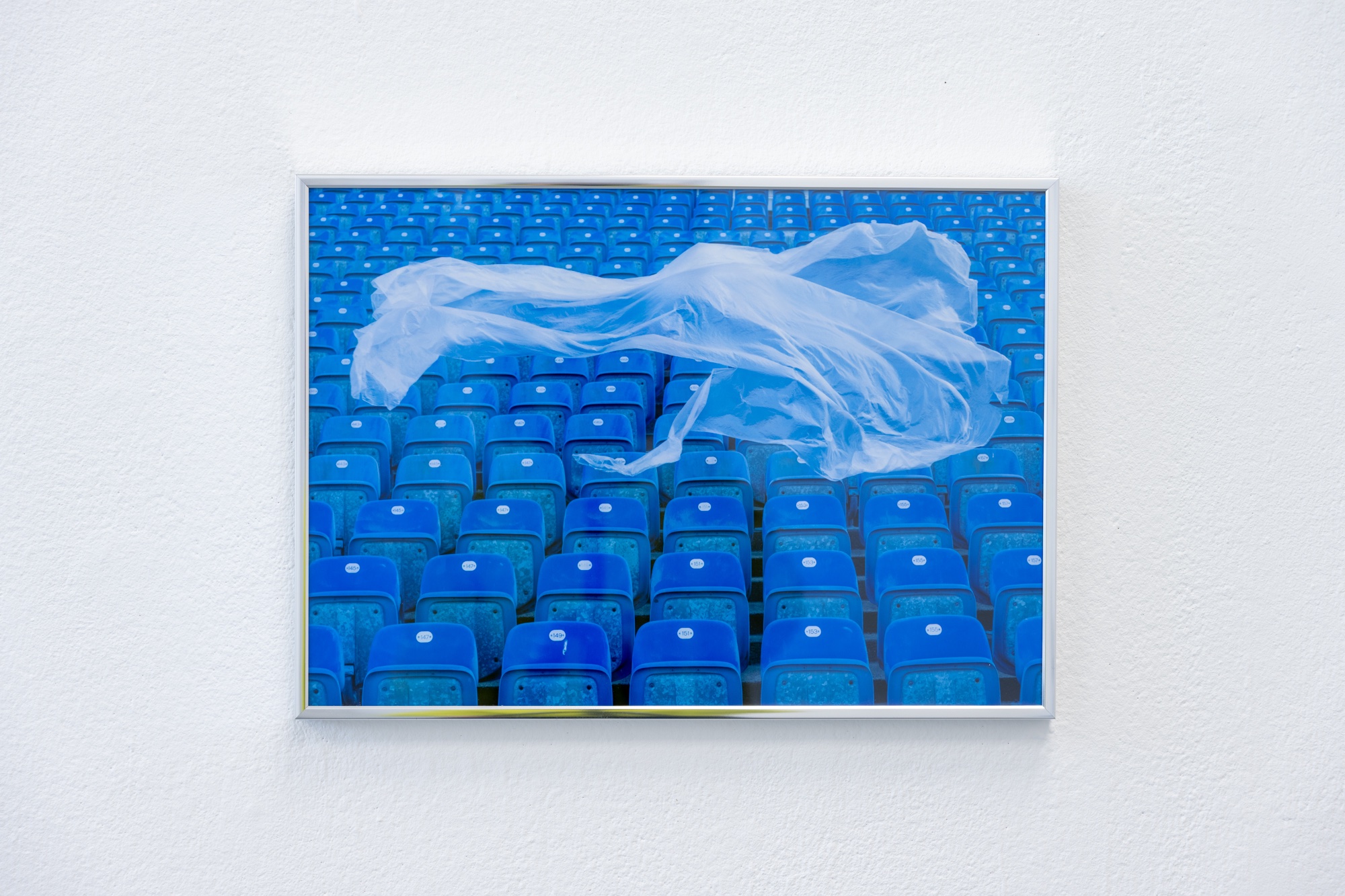
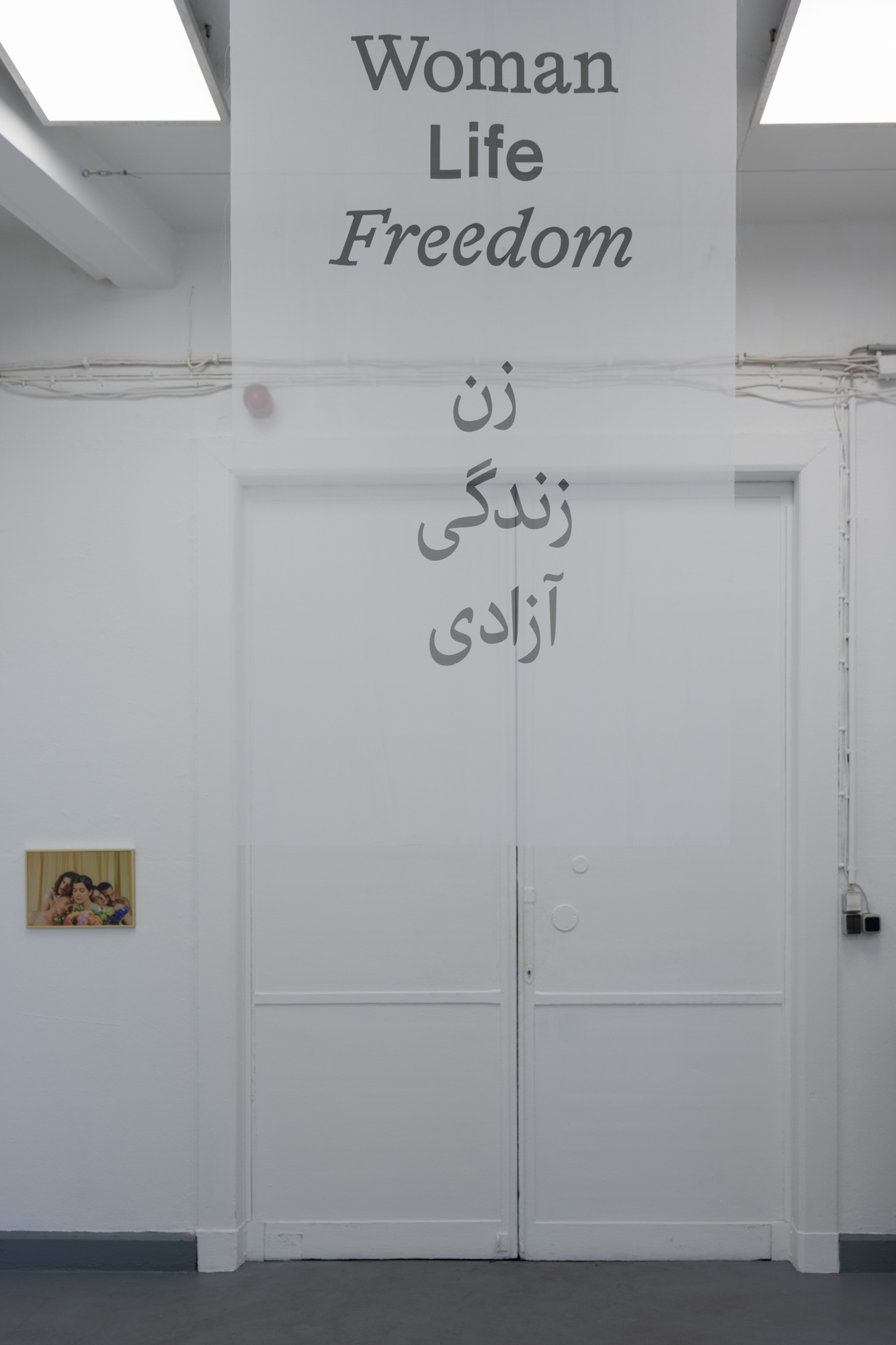
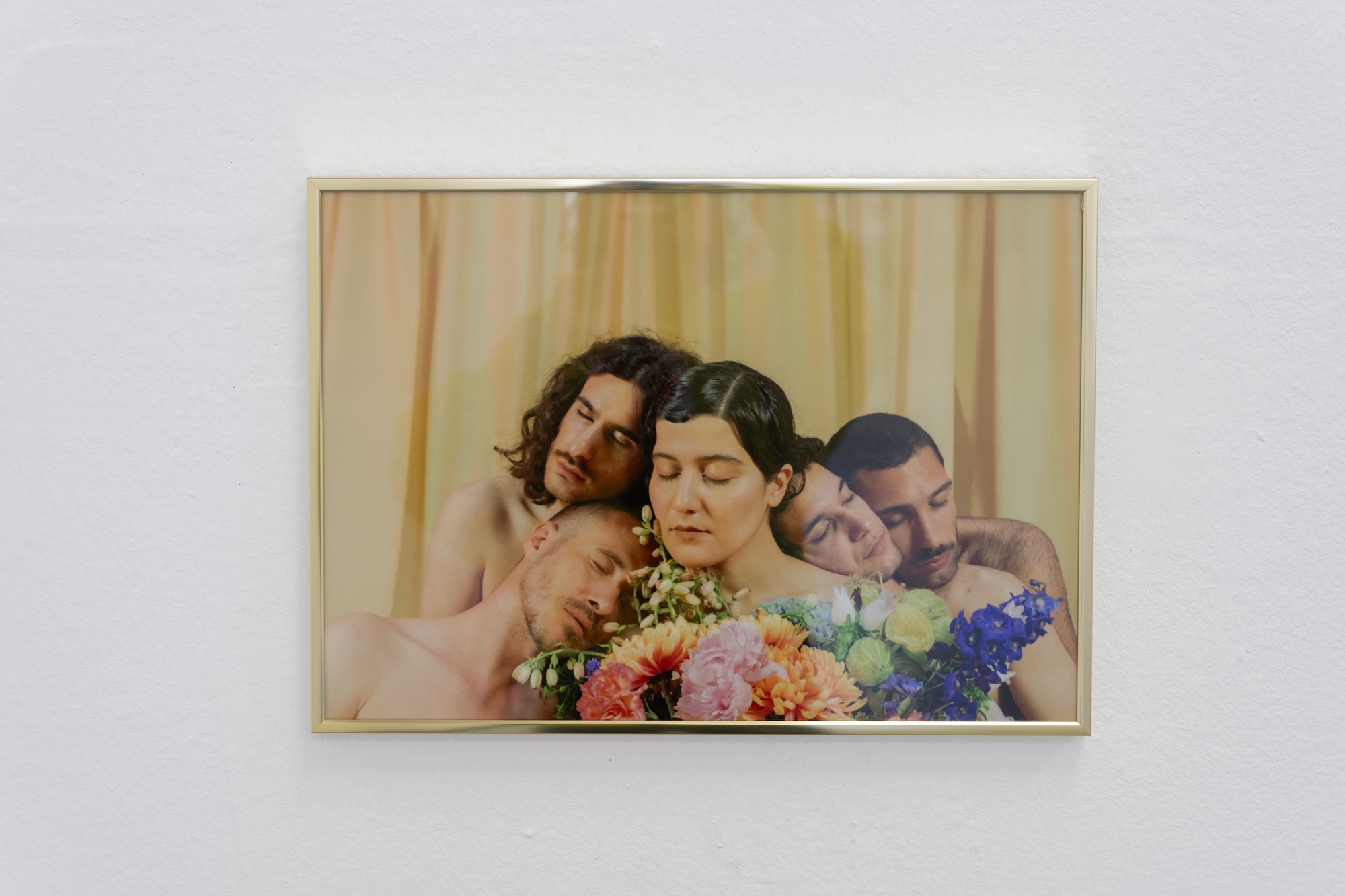
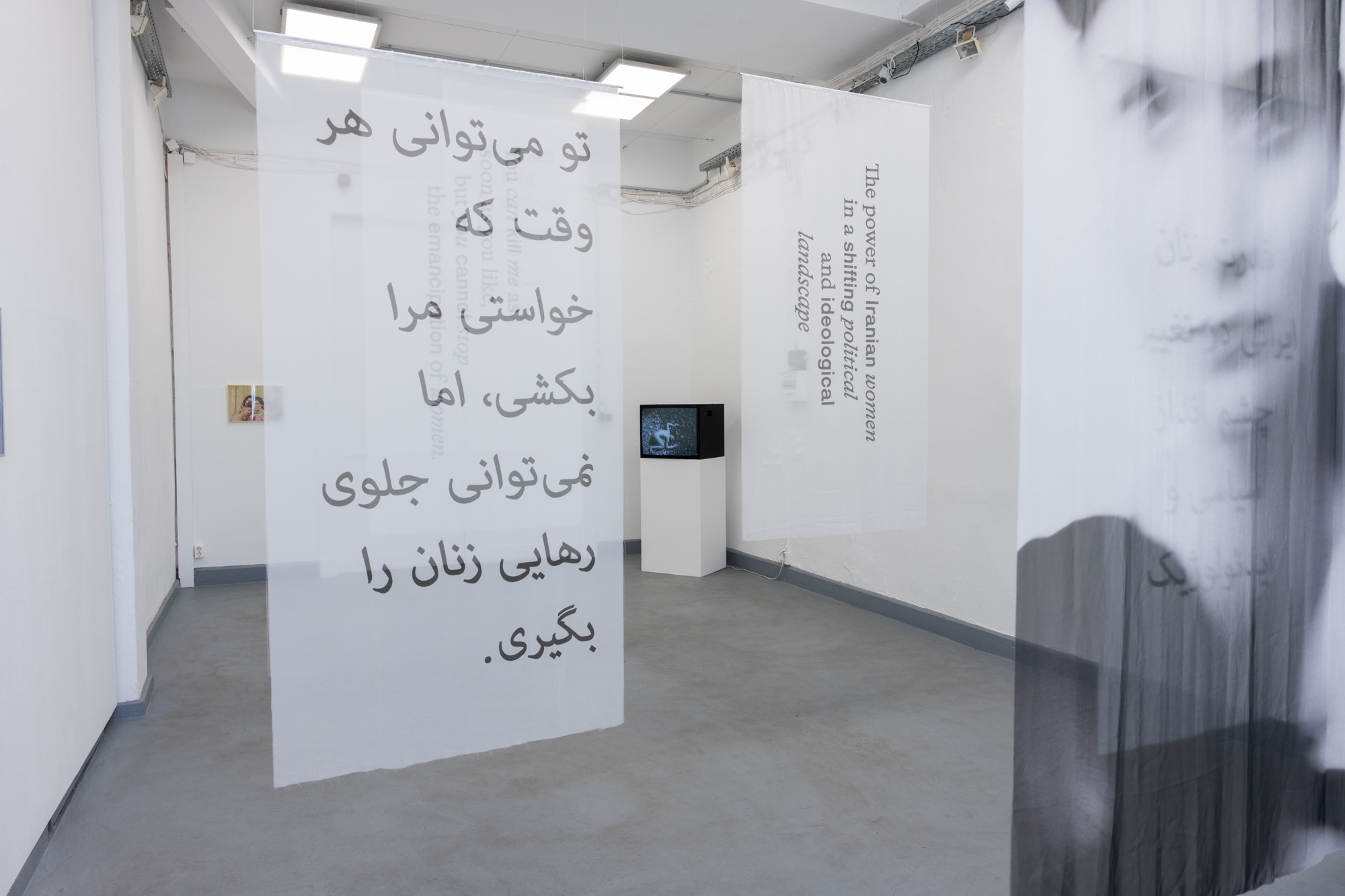
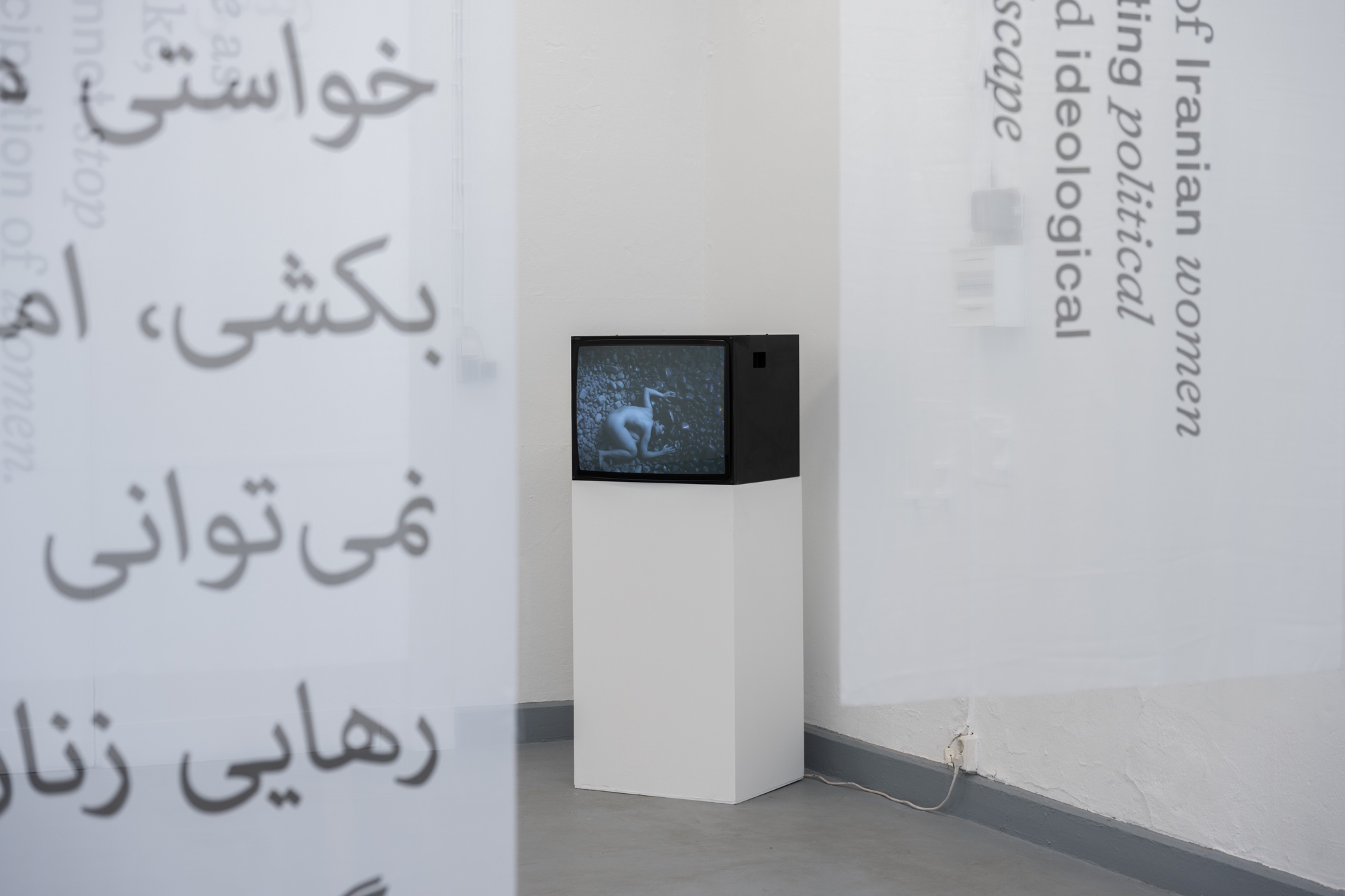
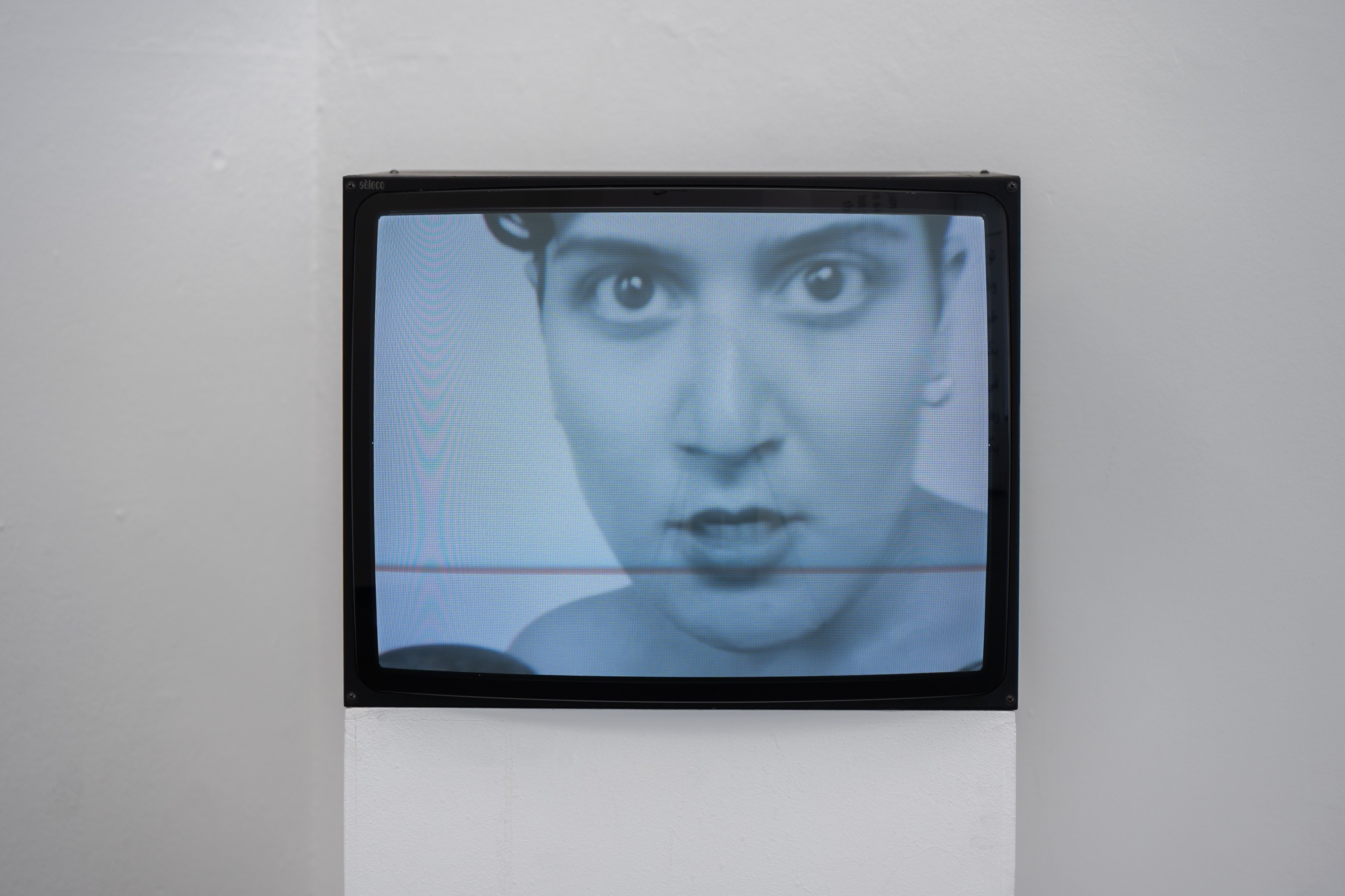
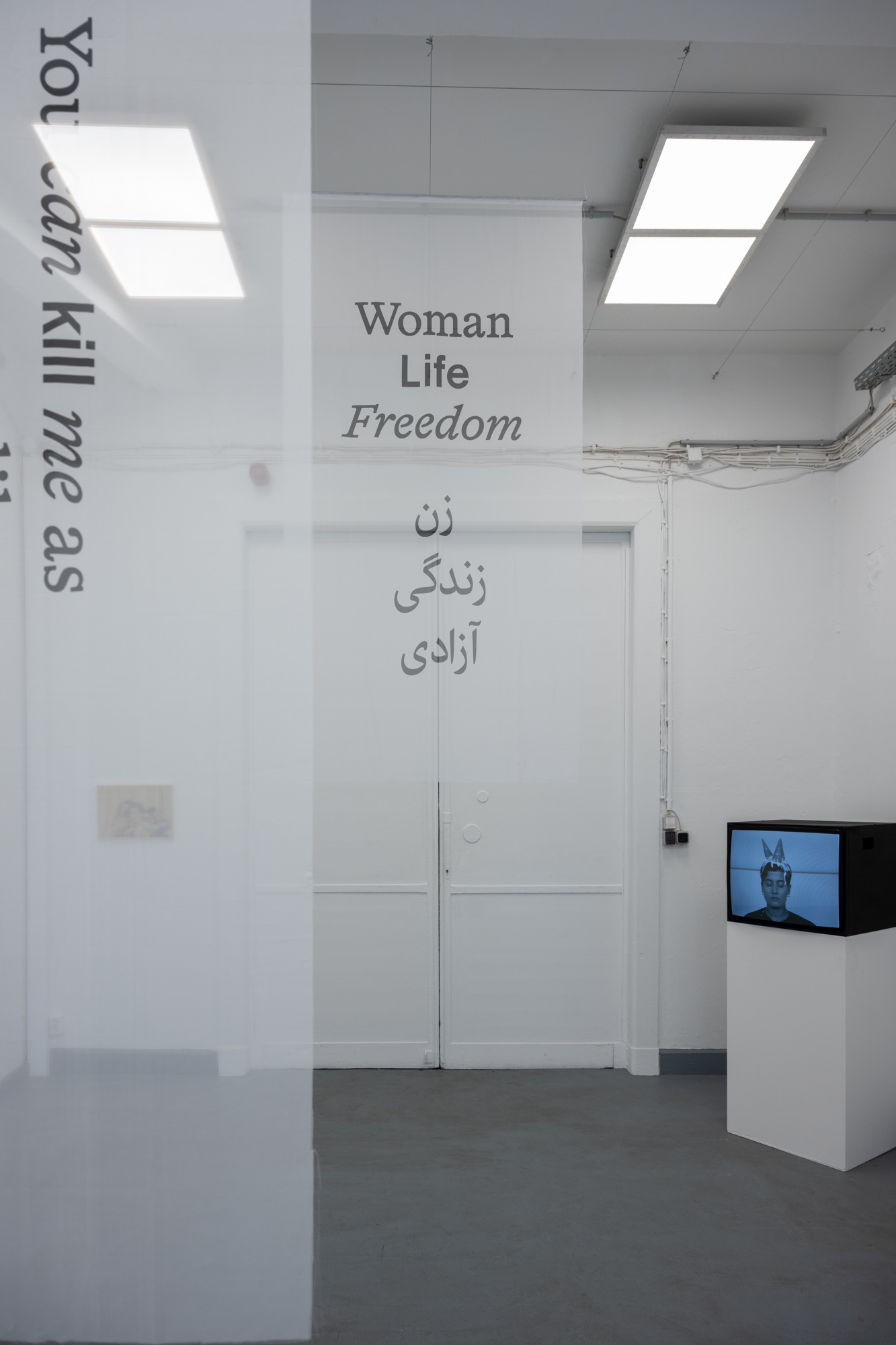

With the exhibition Not a Typical Persian Girl, the Iranian-Swedish artist duo Atoosa Farahmand and Oscar Hagberg focus on the lived realities of women and girls in Iran, caught between state repression and resistance. The 1979 Islamic Revolution marked a profound rupture in women’s autonomy and social participation in Iran; since then, women have been systematically deprived of their rights. The death of Jina Mahsa Amini as a result of brutal police violence sparked nationwide protests in 2022, widely known under the slogan “Jin, Jiyan, Azadî“ (Woman, Life, Freedom). These protests were and continue to be led by women, but are supported by various social groups that oppose the authoritarian regime. The regime responds with massive state violence.
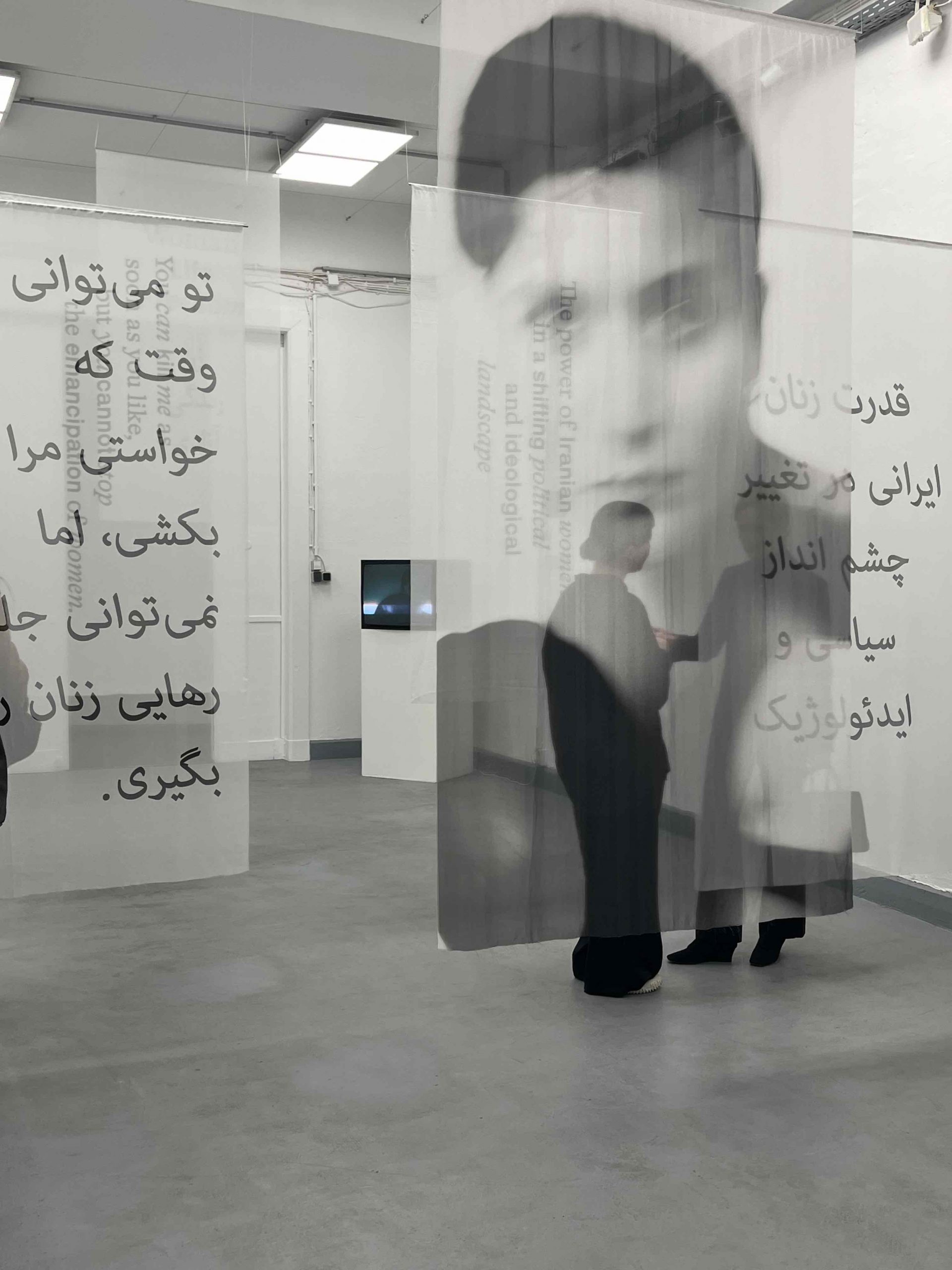
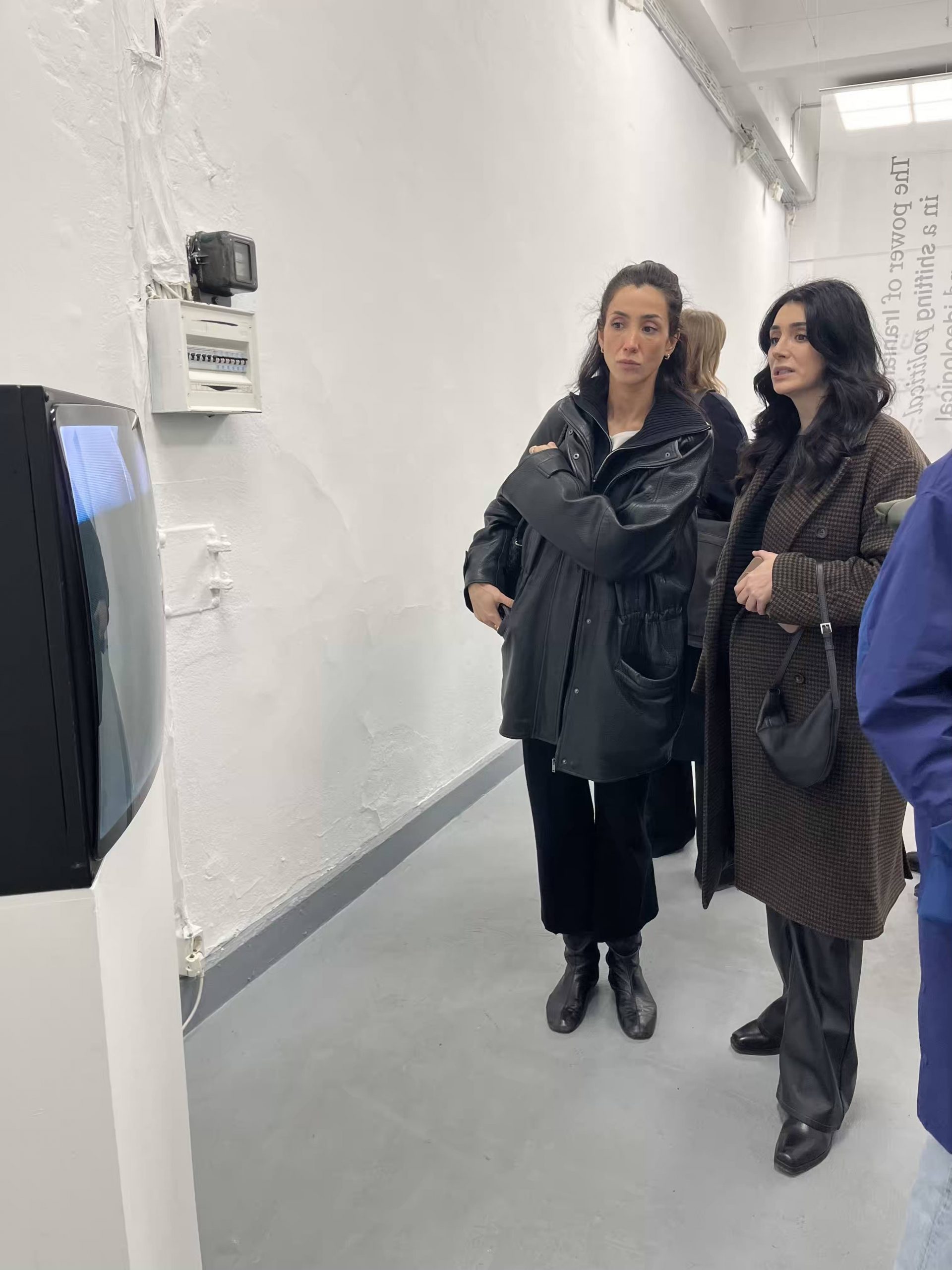
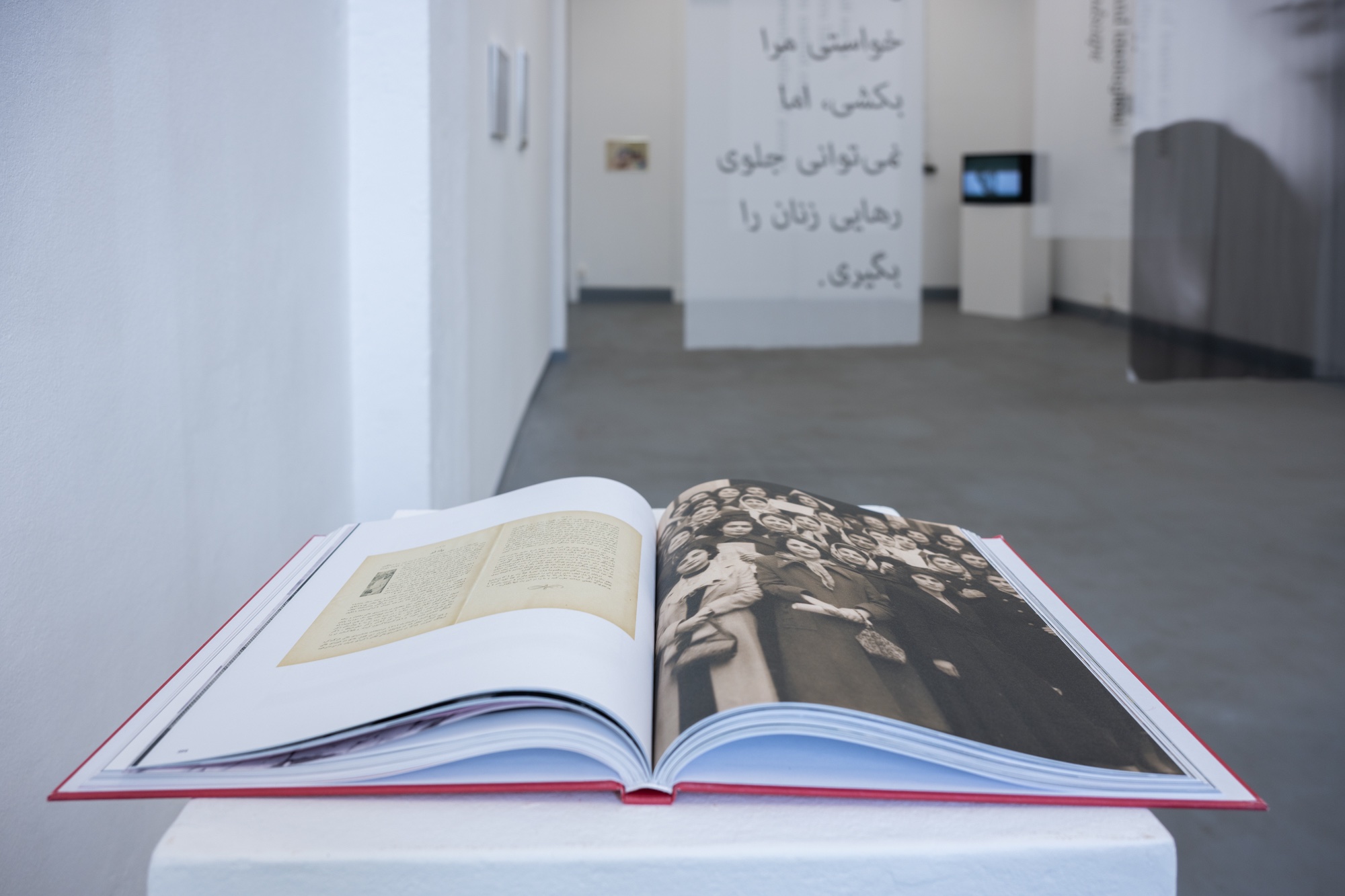
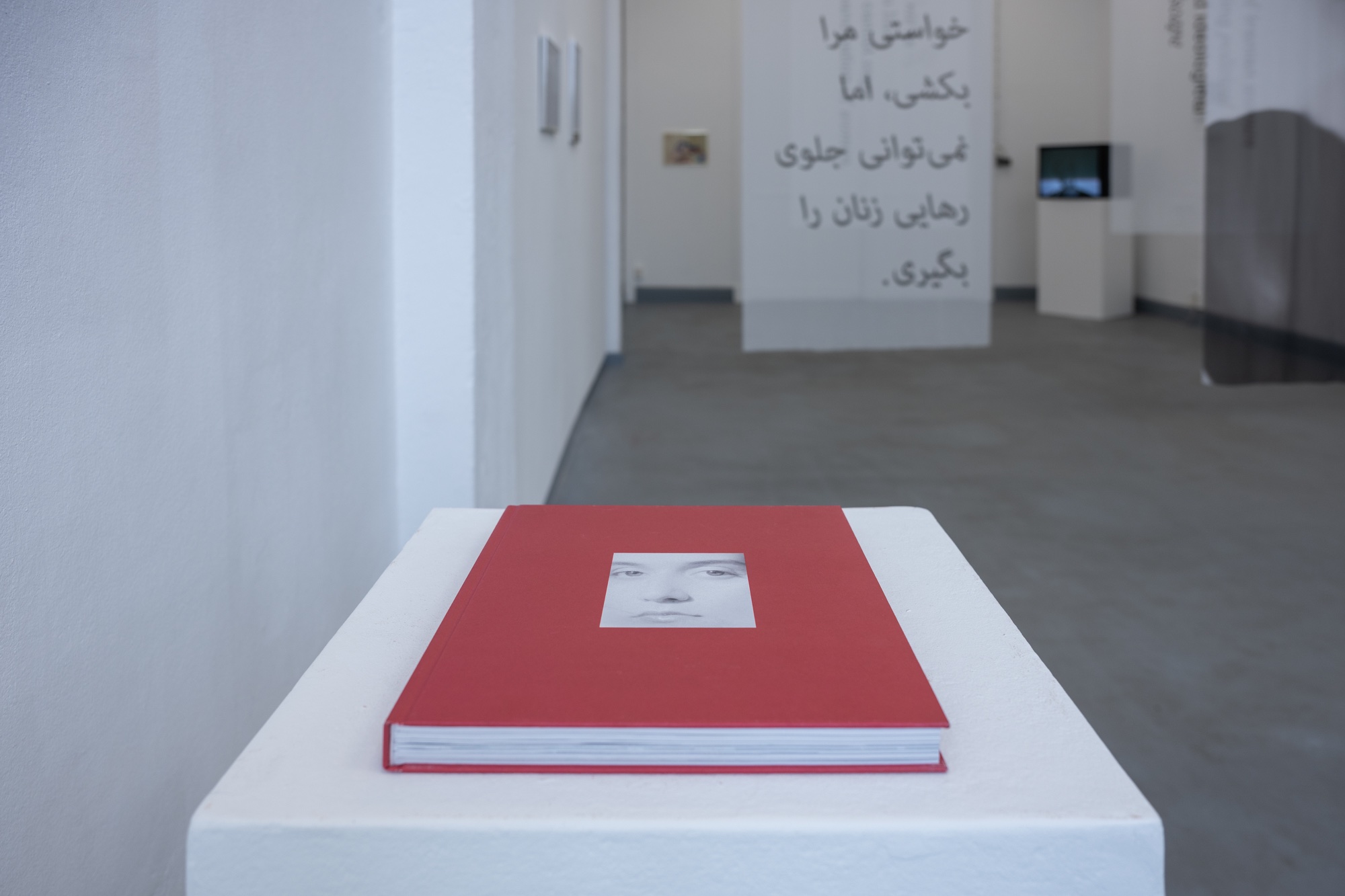
Through photographs, installations, videos, and a publication, Atoosa Farahmand and Oscar Hagberg pay tribute to women and girls who resist disenfranchisement and assert their agency. Their works highlight both small and large acts of everyday resistance and emphasize the persistence, courage, and creativity of women navigating an oppressive system.
The title Not a Typical Persian Girl points to the irony of being labeled socially “untypical” in a context where what is considered “typical” is defined by repressive political ideology. In reality, the supposedly “untypical girl” is one of millions of women in Iran who must repeatedly take risks and resist in order to defend their right to a free life.
Farahmand and Hagberg explore how protest and play, poetry and humor coexist within the ongoing struggle for equality and democracy, making visible experiences that often remain hidden from public view. In this sense, Not a Typical Persian Girl is both an acknowledgment of this struggle and a form of resistance in itself. “ We want to focus our attention on a marginalized reality but also invite the audience to ask how their struggle is connected to our own and what responsibility we have,” say Farahmand and Hagberg.
Not a Typical Persian Girl – Book Presentation: March 7, 2026 // 17:00
Atoosa Farahmand and Oscar Hagberg present their recently published book Not a Typical Persian Girl, which brings together their research on women’s rights and the feminist movement in Iran from 1850 to the present through texts and photographs, and gives space to contemporary voices of resistance through interviews with women and non-binary individuals from Iran and the diaspora.
Biographies
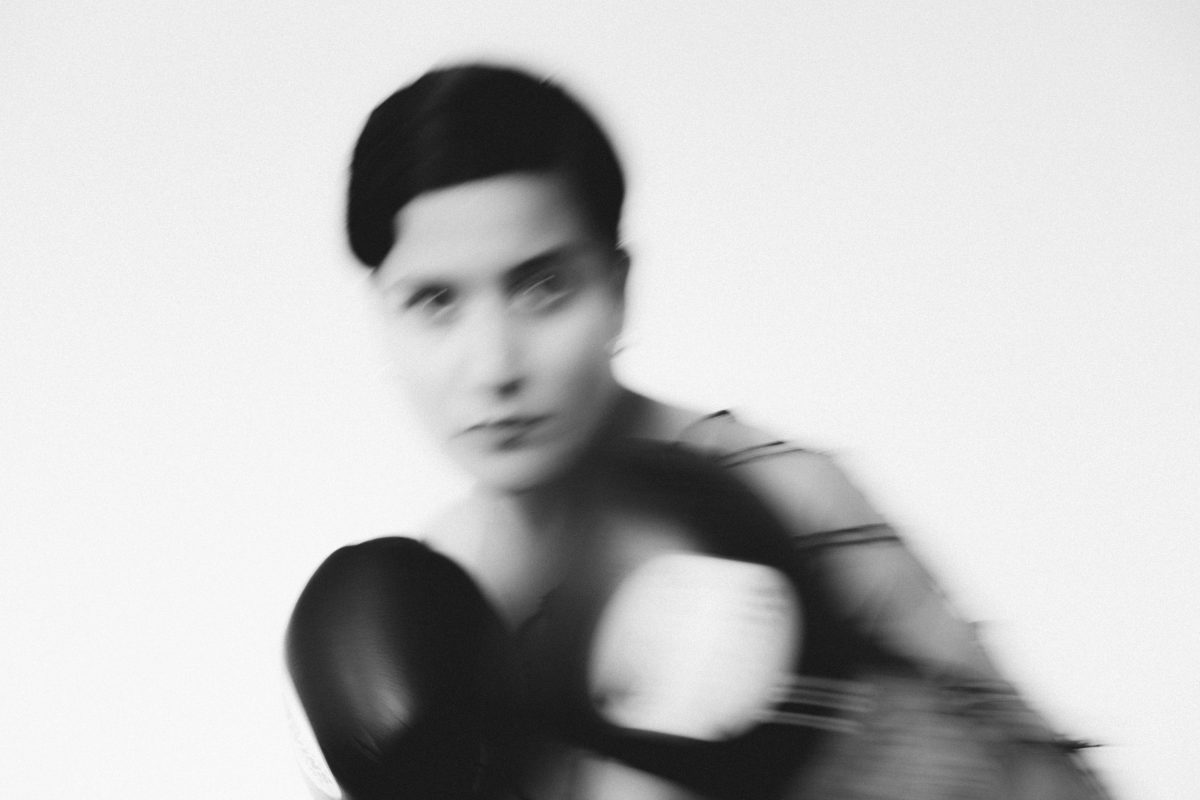
Atoosa Farahmand (1991) is a Swedish-Iranian artist based in Stockholm. Working with photography, video, publications, and installations, she explores resistance, identity, and community through a blend of dark humor and poetry. Her work highlights women’s rights in Iran and emphasizes women’s resilience and everyday strength, shaped by her own experience as an exiled artist threatened by the Iranian regime.